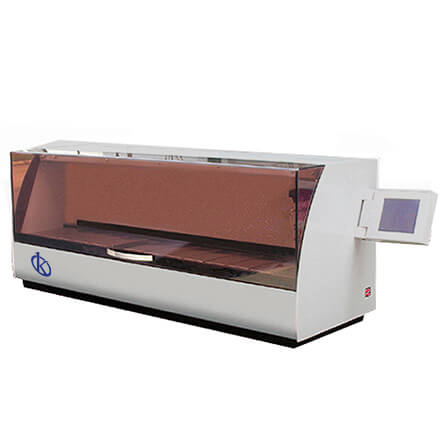
Automatic Slide Stainers: Applications in Research, Biotechnology, and Academia 2026
Automatic slide stainers play a crucial role in modern laboratories, enhancing efficiency and accuracy in the staining process of histological samples. This article delves into the applications, techniques, and best practices of automatic slide stainers in research, biotechnology, and academia as of 2026.
What is it used for in 2026
In 2026, automatic slide stainers are widely used in various laboratory settings, including hospitals, research institutions, and educational facilities. These devices streamline the staining process, allowing for consistent results and high throughput. The primary applications include:
- Histopathology: For staining tissue samples to identify pathological changes.
- Cytology: For preparing slides from cells for diagnostic purposes.
- Immunohistochemistry: For staining specific proteins in tissues to understand disease mechanisms.
- Educational purposes: For teaching students about biological processes and histological techniques.
History and evolution of the technology
The evolution of automatic slide stainers began in the late 20th century when manual staining techniques were the standard. As the need for efficiency and reproducibility grew, the first automatic models emerged, significantly reducing human error and increasing throughput. Over the years, advancements in technology have led to improved user interfaces, enhanced automation, and integration with digital imaging systems. Today, automatic slide stainers are equipped with sophisticated software that allows for customizable staining protocols and real-time monitoring.
How to use it step by step
Using automatic slide stainers effectively requires understanding the device and following a systematic approach:
- Prepare your samples: Ensure that your slides are appropriately mounted and labeled.
- Select the staining protocol: Choose or create a staining program suitable for your samples, considering factors like time and reagent compatibility.
- Load the reagents: Fill the reagent cups and washing tanks with the necessary solutions as per the protocol.
- Set the parameters: Adjust the settings such as temperature, timing, and agitation frequency according to the staining requirements.
- Insert the slides: Place the slides into the designated holders within the machine.
- Start the staining process: Initiate the program and monitor the process through the interface.
- Retrieve and analyze: Once complete, remove the slides, allow them to dry, and proceed with microscopic analysis.
Best techniques and protocols
For optimal results, consider implementing the following techniques and protocols when using automatic slide stainers:
- Standardization: Establish standardized protocols for staining to ensure consistency across different users and batches.
- Calibration: Regularly calibrate equipment to maintain accuracy in temperature and timing.
- Quality control: Include control slides to verify staining effectiveness and troubleshoot issues promptly.
- Training: Provide comprehensive training for laboratory personnel on the use of the equipment and interpretation of results.
Practical applications by laboratory type
Automatic slide stainers find their utility across various laboratory types:
- Clinical Laboratories: Rapid processing of biopsy and cytology samples for diagnostic pathology.
- Research Laboratories: High-throughput staining for research studies examining cellular processes and disease models.
- Educational Institutions: Teaching laboratories utilize staining devices to provide students with hands-on experience in histology and pathology.
Regulations, standards and certifications
Automatic slide stainers must adhere to several regulations and standards to ensure safety and effectiveness:
- ISO 13485: Standards for quality management systems specific to medical devices.
- CLIA: Clinical Laboratory Improvement Amendments ensure laboratory testing quality.
- IEC 61010: Safety requirements for electrical equipment used in measurement, control, and laboratory use.
Comparison with alternative technologies
While automatic slide stainers offer numerous advantages, alternative technologies exist:
- Manual Staining: More flexible but time-consuming and prone to human error.
- Microfluidic Systems: Emerging technology that allows for precise control of reagents on a microscale.
- Digital Staining Techniques: Methods that utilize imaging technologies to analyze samples without physical staining.
Comparison of available models
| Model | Best for | Key specs | Recommended use case |
|---|---|---|---|
| YR435 | High-volume histopathology | Processing capacity of 72 slides simultaneously, LCD touch screen, ergonomic design | Ideal for routine diagnostics in large clinical laboratories. |
| YR435-1 | Specialized staining procedures | Stains 400 slides/hour, modular design, supports simultaneous or individual staining | Suitable for research labs needing flexibility in staining protocols. |
| YR436-1 | Compact operations | 15 tanks, compact size, adjustable treatment time | Perfect for small labs or those with limited space looking for efficiency. |
Common mistakes and how to avoid them
In using automatic slide stainers, certain mistakes can hinder effective results:
- Improper calibration: Regularly check and recalibrate equipment to maintain performance.
- Neglecting maintenance: Follow the manufacturer's maintenance schedule to prevent equipment failure.
- Ignoring control slides: Always include controls to validate staining results.
Maintenance, calibration and good practices 2026
Maintaining automatic slide stainers involves regular cleaning, calibration, and following best practices:
- Daily Cleaning: Clean reagent tanks and spill areas to avoid contamination.
- Weekly Calibration: Check and calibrate temperature and timing settings.
- Documentation: Keep a log of maintenance activities and any issues encountered for future reference.
Cost-benefit analysis 2026
Investing in automatic slide stainers can yield significant returns in efficiency and accuracy:
- Time Savings: Increased throughput reduces the time from sample collection to diagnosis.
- Consistency: Automated processes minimize variability in staining results.
- Labor Cost Reduction: Fewer manual interventions mean lower labor costs over time.
Frequently asked questions
How do I choose the right automatic slide stainer for my laboratory?
Consider the volume of slides you process, the types of staining protocols required, and available space in your lab to ensure you select an appropriate model.
What maintenance is required for automatic slide stainers?
Routine maintenance includes daily cleaning of reagent tanks, weekly calibration, and adherence to the manufacturer's maintenance schedule to ensure optimal performance.
Can I create custom staining protocols?
Yes, most automatic slide stainers allow users to create and save custom staining protocols tailored to specific laboratory needs.
What are the benefits of using automatic slide stainers over manual staining?
Automatic slide stainers offer higher throughput, reduced variability, and improved reproducibility compared to manual staining methods.
How often should I calibrate my automatic slide stainer?
Calibration should be performed weekly or as recommended by the manufacturer to maintain accuracy in temperature and time settings.
Is training necessary for using automatic slide stainers?
Yes, comprehensive training is essential for laboratory personnel to ensure effective and safe use of the equipment, as well as accurate result interpretation.
Where can I request a quote for automatic slide stainers?
You can request a quote through our online platform or contact our sales team for personalized assistance with your laboratory equipment needs.
If you are looking for a fusion of innovation and quality, you have come to the right place. At Kalstein, we offer you the luxury of exploring our exclusive catalog of laboratory equipment. We manufacture every device to the highest standards of excellence. Our intuitive and seamless online purchasing channels are designed for your convenience, securing the most competitive prices. Hesitate no longer — we bring science to life, it is time to become part of our community.