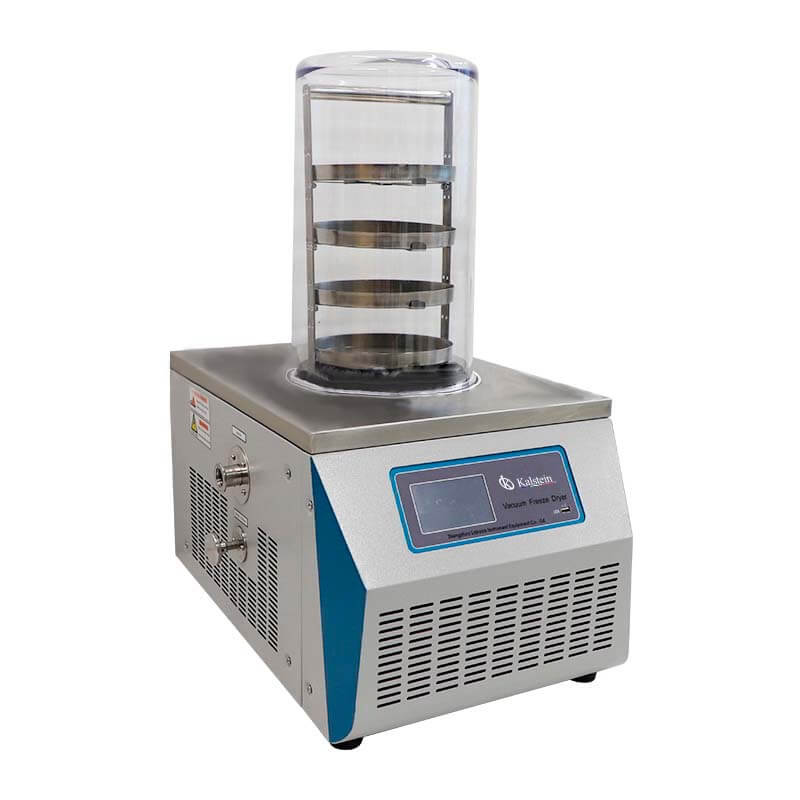
Benchtop Laboratory Freeze Dryer: Common Mistakes and How to Avoid Them in Daily Operations 2026
What is it used for in 2026
In 2026, benchtop laboratory freeze dryers play a crucial role in various scientific fields, including pharmaceuticals, food technology, and biological research. They are primarily used for the lyophilization process, which removes moisture from products while preserving their chemical and biological properties. This enables long-term storage of sensitive materials, making it ideal for applications such as vaccine preservation, pharmaceutical formulations, and biological sample storage.
History and evolution of the technology
The lyophilization process dates back to the 19th century, with early applications in food preservation. Over the decades, advancements in technology have led to the development of more efficient and compact benchtop freeze dryers. Modern models now feature enhanced vacuum control, improved thermal conductivity, and user-friendly interfaces, allowing for precise control over freeze-drying conditions and better product quality.
How to use it step by step
Using a benchtop laboratory freeze dryer involves several key steps:
- Preparation: Ensure that the samples are properly prepared and contained in suitable vials or trays.
- Loading: Place the samples into the freeze dryer, ensuring proper spacing for airflow.
- Setting parameters: Adjust the temperature and vacuum settings according to the material being dried.
- Monitoring: Use the device’s built-in monitoring features to track temperature and vacuum levels throughout the process.
- Completion: Once the process is complete, carefully remove the samples and store them in a controlled environment.
Best techniques and protocols
Implementing best practices is essential for optimizing freeze-drying results. Some recommended techniques include:
- Using pre-freezing to solidify samples before lyophilization.
- Regularly calibrating the equipment to maintain accuracy.
- Following specific protocols tailored to the material being processed.
- Documenting each run to analyze performance and outcomes.
Practical applications by laboratory type
Different laboratories utilize benchtop freeze dryers for various applications:
- Pharmaceuticals: Production of lyophilized drugs and vaccines.
- Food Technology: Preservation of food products while maintaining flavor and texture.
- Biological Research: Storage of biological samples and reagents for future experiments.
Regulations, standards and certifications
Laboratories using benchtop freeze dryers must adhere to various regulations and standards, including:
- Good Manufacturing Practices (GMP) for pharmaceutical production.
- ISO standards for laboratory equipment.
- FDA regulations for medical and biological products.
Comparison with alternative technologies
While benchtop freeze dryers are highly effective, alternative technologies such as spray drying and vacuum drying exist. Freeze drying preserves the integrity of sensitive compounds better than most alternatives, especially for heat-sensitive materials. However, spray drying may be more cost-effective for large-scale applications.
Comparison of available models
| Model | Best for | Key specs | Recommended use case |
|---|---|---|---|
| YR05186 | General laboratory use | Vacuum Degree: < 10 Pa, Capacity: 3-4 L/24h | Ideal for pharmaceuticals and biological samples |
| YR05187 | Small to medium scale experiments | Vacuum Degree: < 10 Pa, Capacity: 3-4 L/24h | Optimal for research settings |
| YR05188 | Advanced laboratory applications | Vacuum Degree: < 10 Pa, Capacity: 3-4 L/24h | Suitable for high-value biological samples |
| YR05189 | Food preservation | Vacuum Degree: < 10 Pa, Capacity: 3-4 L/24h | Great for food technology labs |
| YR05189-1 | Custom laboratory operations | Vacuum Degree: < 10 Pa, Capacity: 3-4kg/24h | Best for specialized applications requiring customization |
Common mistakes and how to avoid them
Common mistakes with benchtop freeze dryers include:
- Improper sample preparation: Ensure samples are adequately frozen and sized.
- Neglecting maintenance: Regular calibration is crucial for optimal performance.
- Incorrect parameter settings: Always refer to guidelines specific to the material being processed.
- Overloading the dryer: Follow manufacturer guidelines on load capacity.
Maintenance, calibration and good practices 2026
Maintaining a benchtop freeze dryer involves regular checks and calibrations. Clean the equipment after every use, verify the integrity of vacuum seals, and ensure all components are functioning correctly. Schedule routine maintenance checks to prevent any operational issues.
Cost-benefit analysis 2026
Investing in a benchtop freeze dryer can provide substantial benefits in terms of product quality and shelf-life. While the initial investment may be significant, the long-term savings in product losses and improved operational efficiency can outweigh the costs. Additionally, the versatility of these devices allows for diverse applications, enhancing laboratory productivity.
Frequently asked questions
What factors should I consider when choosing a benchtop freeze dryer?
When selecting a benchtop freeze dryer, consider the intended applications, sample volume, required temperature range, and the overall budget. Evaluate the specific features and specifications that align with your laboratory needs.
How do I ensure my samples are adequately prepared for freeze drying?
To prepare samples, ensure they are uniformly sized and appropriately frozen. Avoid using materials that do not freeze well or those that may form large ice crystals, as these can affect the quality of the final product.
What are the common issues faced during the freeze-drying process?
Common issues include inadequate vacuum levels, fluctuating temperatures, and sample contamination. Regular monitoring and adherence to protocols can help mitigate these problems.
How often should I calibrate my freeze dryer?
It is recommended to calibrate your freeze dryer at least once a year, or more frequently if the equipment is used extensively or if quality control standards require it.
Can I use a benchtop freeze dryer for food preservation?
Yes, benchtop freeze dryers are ideal for food preservation. They maintain the flavor and nutritional value of the food while significantly extending its shelf-life.
What is the typical lifespan of a benchtop freeze dryer?
The lifespan of a benchtop freeze dryer can vary between models and usage conditions, but with proper maintenance, they can last for many years, often exceeding a decade.
If you are looking for a fusion of innovation and quality, you have come to the right place. At Kalstein, we offer you the luxury of exploring our exclusive catalog of laboratory equipment. We manufacture every device to the highest standards of excellence. Our intuitive and seamless online purchasing channels are designed for your convenience, securing the most competitive prices. Hesitate no longer — we bring science to life, it is time to become part of our community.