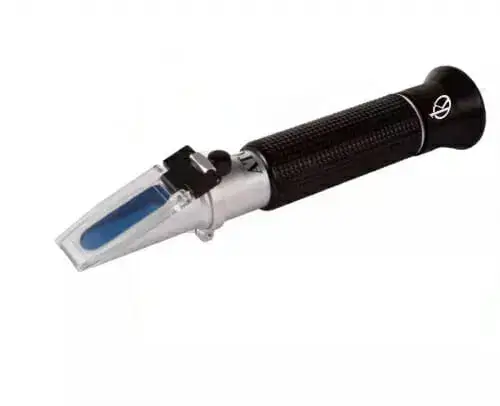
Car Refractometers: Energy Sustainability and Environmental Footprint Reduction 2026
In the modern laboratory, the focus on sustainability and environmental responsibility has become paramount. Car refractometers, such as the YR05916, YR05917, YR05918, YR05919, YR05920, and YR05921, not only provide precise measurements but also reflect significant advancements in energy sustainability. This article explores how these devices contribute to reduced environmental footprints, catering to the needs of environmentally conscious laboratories.
Understanding the Importance of Energy Sustainability in Laboratories
Energy sustainability refers to the practices and technologies that minimize ecological impacts while maximizing efficiency. In laboratory settings, particularly in automotive and chemical testing, refractometers play an essential role. Utilizing models like the YR05916 and YR05917, labs can ensure they are compliant with sustainability standards while achieving accurate results.
How Car Refractometers Minimize Environmental Footprint
Car refractometers reduce environmental footprints significantly by ensuring efficient use of resources. Their capability to analyze coolant solutions helps in maintaining optimal engine performance, thus minimizing emissions. For instance, the YR05918 model is specifically designed for testing ethylene glycol concentrations, which is crucial for reducing waste fluid disposal and promoting recycling within automotive industries.
Comparing Energy Efficiency Among Available Models
When comparing car refractometers, it’s crucial to evaluate their energy consumption and efficiency. A focus on models such as YR05919 and YR05920 reveals differences in design and functionality that contribute to overall energy savings. These models are equipped with Automatic Temperature Compensation (ATC), which adjusts readings based on temperature variations, helping users avoid unnecessary recalibrations that consume time and resources.
Model Specifications and Their Contribution to Sustainability
| Model | Measurement Range | Precision | Material | Best For |
|---|---|---|---|---|
| YR05916 | −60°C to 0°C | ±0.01sg | Aluminum | Coolant analysis |
| YR05917 | −60°C to 0°C | ±0.01sg | Aluminum | Coolant and windshield washer fluid |
| YR05918 | −60°F to 32°F | ±0.01sg | Aluminum | Antifreeze concentration |
| YR05919 | −60°C to 0°C | ±0.01sg | Aluminum | Fluid analysis |
| YR05920 | −60°C to 0°C | ±0.01sg | Aluminum | Coolant testing |
| YR05921 | −60°C to 0°C | ±0.01sg | Aluminum | Windshield washer fluid |
Common Mistakes and How to Avoid Them
In the pursuit of energy sustainability, laboratories often make mistakes that can compromise both efficiency and data integrity. One common error is neglecting to calibrate refractometers according to their specific temperature ranges, which can lead to inaccurate results and additional energy consumption. For instance, using the YR05921 without proper calibration could waste resources, negating its sustainability benefits.
Frequently Asked Questions
How can car refractometers reduce environmental impact in automotive labs?
Car refractometers like the YR05916 help automotive labs analyze coolant solutions accurately, reducing waste and promoting recycling. This lowers the overall environmental impact associated with improper disposal of hazardous fluids.
What is the energy efficiency of the YR05917 car refractometer?
The YR05917 model is designed with Automatic Temperature Compensation, which allows for accurate readings without unnecessary recalibration, thus saving energy and increasing operational efficiency in laboratory settings.
Which car refractometer is best for measuring antifreeze concentrations?
The YR05918 is specifically designed for measuring antifreeze concentrations, providing precise readings that can help reduce waste and improve resource management in laboratories.
How do car refractometers contribute to sustainability in testing environments?
Car refractometers contribute to sustainability by enabling labs to accurately test and maintain coolant systems, reducing the need for frequent fluid replacements and minimizing chemical waste.
What specifications should I consider for energy-efficient car refractometers?
Key specifications include measurement range, precision, and material used. Models like YR05920 and YR05921 are made of aluminum, which is lightweight and durable, enhancing their efficiency in field conditions.
How frequently should car refractometers be calibrated for optimal performance?
Car refractometers should be calibrated regularly, ideally before major testing sessions. This ensures accuracy and helps maintain energy efficiency, particularly with models like YR05919 that rely on precise readings.
What are the environmental benefits of using the YR05919 model?
The YR05919 model allows for efficient fluid analysis, helping to maintain optimal vehicle performance while minimizing environmental contaminants associated with mismanaged fluids.
Which car refractometer model is suitable for windshield washer fluid testing?
The YR05921 model is specifically tailored for testing windshield washer fluid concentrations, helping labs ensure that fluids are compliant and environmentally friendly, reducing hazardous waste.
If you are looking for a fusion of innovation and quality, you have come to the right place. At Kalstein, we offer you the luxury of exploring our exclusive catalog of laboratory equipment. We manufacture every device to the highest standards of excellence. Our intuitive and seamless online purchasing channels are designed for your convenience, securing the most competitive prices. Hesitate no longer — we bring science to life, it is time to become part of our community.