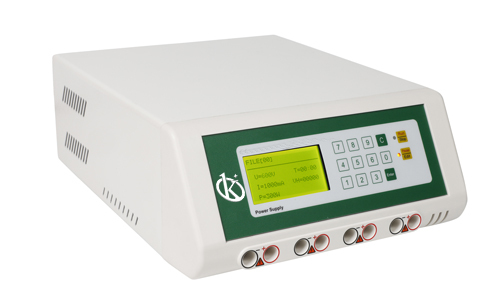
High-Voltage Power Supply: Techniques and Protocols in 2026
What is it used for in 2026
In 2026, high-voltage power supplies are essential in various laboratory applications, including electrophoresis, particle acceleration, and plasma generation. Their primary function is to provide controlled high voltage for experiments that require precise power management. These devices are used in research and industrial laboratories for applications such as materials testing, healthcare diagnostics, and educational purposes in physics and engineering labs.
History and evolution of the technology
High-voltage power supplies have evolved significantly over the decades. Initially, these devices were bulky and inefficient, primarily relying on transformer technology. The introduction of solid-state electronics in the late 20th century revolutionized the field, leading to more compact and reliable units. By 2026, advancements in microprocessor technology and smart controls have made it possible to develop high-voltage power supplies that are not only more efficient but also capable of storing methods and performing complex automated tasks.
How to use it step by step
Using a high-voltage power supply involves several key steps:
- Setup: Ensure the device is placed on a stable surface away from moisture and extreme temperatures.
- Connections: Connect the output terminals to the equipment requiring high voltage, ensuring proper polarity.
- Power On: Switch on the unit and allow it to complete its self-check.
- Configuration: Use the digital interface to set the desired output voltage, current, or power level.
- Monitoring: Continuously observe the output on the LCD display to ensure it remains within the desired parameters.
- Data Logging: If applicable, use the built-in memory functions to log data during the experiment.
- Shutdown: Once the experiment is complete, safely power down the unit and disconnect the equipment.
Best techniques and protocols
To maximize the effectiveness of high-voltage power supplies, several best practices should be observed:
- Always conduct a thorough risk assessment before operating high-voltage equipment.
- Utilize the temperature control features to prevent overheating, especially during prolonged use.
- Implement regular calibration and maintenance checks to ensure accuracy.
- Use the memory storage to save common settings and methods to streamline repetitive experiments.
- Educate all personnel on safety protocols and operational procedures to mitigate risks.
Practical applications by laboratory type
High-voltage power supplies find applications across various laboratory environments:
- Research Laboratories: Used for fundamental research in physics and chemistry.
- Medical Laboratories: Essential for diagnostic procedures like electrophoresis.
- Industrial Laboratories: Applied in material testing and quality control processes.
- Educational Institutions: Employed in teaching and demonstration scenarios in engineering courses.
Regulations, standards and certifications
In 2026, high-voltage power supplies must comply with several standards to ensure safety and reliability. Key certifications include:
- ISO 9001 for quality management systems.
- IEC 61010 for safety requirements for electrical equipment for measurement, control, and laboratory use.
- CE marking for compliance with European health, safety, and environmental protection standards.
Comparison with alternative technologies
High-voltage power supplies are often compared to other technologies such as linear power supplies and switching power supplies:
- Linear Power Supplies: Offer lower noise levels but are often bulkier and less efficient.
- Switching Power Supplies: Provide higher efficiency and compact size but can introduce electrical noise.
- High-Voltage Power Supplies: Provide specific voltage ranges and stability for specialized applications, making them ideal for research and industrial applications.
Comparison of available models
| Model | Best for | Key specs | Recommended use case |
|---|---|---|---|
| YR03409 | General laboratory use | 20–3000 V, 1–200 mA, 1–200 W | Electrophoresis with temperature control |
| YR03408 | Advanced research environments | 20–5000 V, 1–200 mA, 1–100 W | Complex sequencing applications |
| YR03405 | Material testing | 10–600 V, 1–500 mA, 1–300 W | Industrial quality control processes |
| YR03406 | Electrophoresis | 20–1600 V, 1–100 mA, 1–160 W | Laboratory biochemical assays |
| YR03407 | Flexible laboratory applications | 20–3000 V, 1–400 mA, 1–400 W | General research uses and experiments |
Common mistakes and how to avoid them
When operating high-voltage power supplies, several common mistakes can lead to equipment damage or safety hazards:
- Ignoring Safety Protocols: Always adhere to safety guidelines and wear appropriate personal protective equipment (PPE).
- Improper Connections: Double-check connections before powering up to prevent short circuits.
- Neglecting Calibration: Regularly calibrate the equipment to ensure accurate readings and outputs.
- Overloading the Device: Never exceed the specified voltage or current ratings.
Maintenance, calibration and good practices 2026
Proper maintenance and calibration are crucial for the longevity and reliability of high-voltage power supplies:
- Perform daily visual inspections for any signs of wear or damage.
- Calibrate the device at regular intervals as specified by the manufacturer.
- Keep the unit clean and free of dust and contaminants.
- Store the equipment in a dry and stable environment when not in use.
Cost-benefit analysis 2026
Investing in high-voltage power supplies can yield significant benefits for laboratories:
- Efficiency Gains: Advanced models reduce energy consumption while providing stable outputs.
- Enhanced Capabilities: Features such as programmable methods and automated controls streamline operations.
- Return on Investment: By improving laboratory workflows, these devices can enhance productivity and analysis accuracy, leading to cost savings in the long run.
Frequently asked questions
What safety measures should I take when using a high-voltage power supply?
Always wear appropriate personal protective equipment, ensure that all connections are secure, and follow the manufacturer's safety instructions to mitigate risks.
How do I choose the right high-voltage power supply for my needs?
Consider the required voltage, current, and power ratings for your applications, as well as features like programmability and data logging capabilities.
Can I use a high-voltage power supply for different laboratory experiments?
Yes, many high-voltage power supplies are versatile and can be used for a range of applications, provided they meet the necessary voltage and current requirements.
How often should I calibrate my high-voltage power supply?
Calibration frequency depends on usage, but it is generally recommended to calibrate at least once a year or whenever accuracy is critical.
What are the signs that my high-voltage power supply needs maintenance?
Look for unusual noises, erratic output readings, or physical damage, and perform maintenance checks regularly to ensure optimal performance.
Where can I find a high-voltage power supply with the best features for my laboratory?
Explore different suppliers to compare models and features, and consider reaching out for quotes to find the best options for your needs.
If you are looking for a fusion of innovation and quality, you have come to the right place. At Kalstein, we offer you the luxury of exploring our exclusive catalog of laboratory equipment. We manufacture every device to the highest standards of excellence. Our intuitive and seamless online purchasing channels are designed for your convenience, securing the most competitive prices. Hesitate no longer — we bring science to life, it is time to become part of our community.