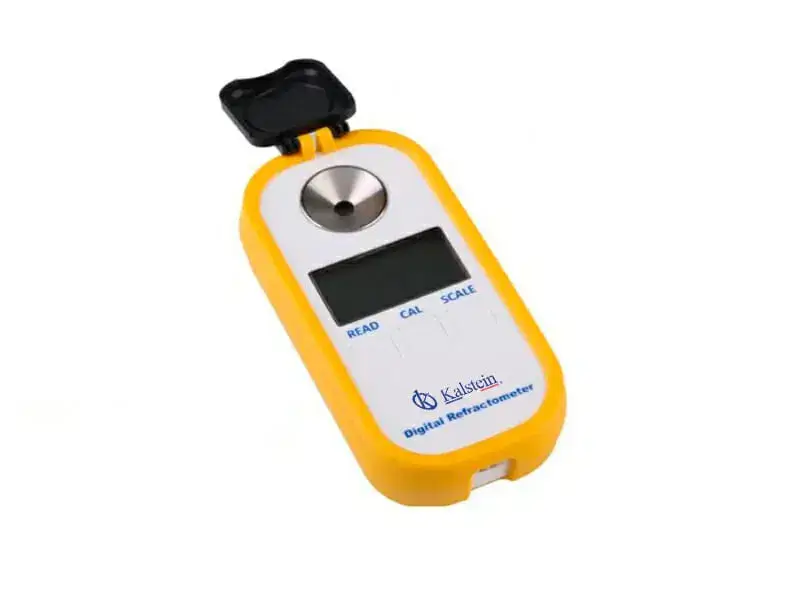
ISO/IEC Compliance in Laboratories: A Comprehensive Guide for Digital Salinity Refractometers
In the ever-evolving landscape of laboratory practices, maintaining compliance with ISO/IEC standards is crucial. These standards not only ensure quality and accuracy but also provide a framework for laboratories to operate efficiently. This article delves into the significance of ISO/IEC compliance, focusing on digital salinity refractometers and how specific models meet these regulatory requirements.
Understanding ISO/IEC Standards in Laboratory Context
ISO (International Organization for Standardization) and IEC (International Electrotechnical Commission) set international standards that enhance quality, reliability, and efficiency in various fields. In laboratories, adherence to these standards, such as ISO 17025 and IEC 61010, is vital as it ensures that testing and calibration are conducted under controlled conditions that yield accurate and reliable results.
ISO 17025 specifically deals with the competence of testing and calibration laboratories, while IEC 61010 pertains to the safety requirements for electrical equipment used in measurement, control, and laboratory environments. Compliance with these norms helps laboratories minimize risks, enhance operational integrity, and foster trust with clients and stakeholders.
ISO 17025: Key Requirements for Compliance
ISO 17025 outlines several essential requirements that laboratories must meet. These include a robust quality management system, personnel competence, equipment calibration, and method validation. When it comes to digital salinity refractometers, it is crucial to ensure that devices such as the YR05953 and YR05954 are calibrated according to these standards, ensuring accuracy in salinity measurement.
Moreover, laboratories must maintain thorough records of calibration and testing results, which facilitates traceability and compliance during audits. Regular quality assessments and internal audits should be performed to evaluate the effectiveness of the quality management system.
IEC 61010: Safety Standards for Laboratory Equipment
IEC 61010 focuses on the safety of electrical equipment used in laboratories. Compliance with these standards is essential to protect operators and the integrity of the testing process. For instance, digital salinity refractometers like the YR05956 and YR05955 are equipped with safety features that prevent electrical hazards and ensure safe operation within specified temperature ranges.
Regular checks and maintenance of safety features, along with adherence to manufacturer guidelines, are critical for laboratories aiming to comply with IEC 61010. This not only safeguards personnel but also enhances the longevity of the equipment.
Compliance Documentation: Critical for Audits
Documentation is a cornerstone of compliance. Laboratories must maintain comprehensive records that detail standard operating procedures (SOPs), calibration reports, maintenance logs, and training records for personnel. For digital salinity refractometers, this documentation must include calibration certificates that demonstrate compliance with ISO 17025.
Creating a systematic approach to documentation will facilitate smoother audits and inspections. Following a standardized format for record-keeping ensures that all necessary information is readily available for review.
Traceability and Its Importance in Laboratory Settings
Traceability refers to the ability to trace the history, application, or location of an item or measurement. In the context of laboratory compliance, traceability is vital for ensuring that measurements are accurate and reliable. Digital salinity refractometers such as the YR05957 and YR05958 must have a documented traceability pathway, linking measurements back to national or international standards.
Maintaining traceability requires a commitment to regular calibration and validation of measurements. Laboratories should establish protocols for recalibrating equipment and conducting regular audits to ensure compliance with traceability requirements.
Comparison of Available Models
| Model Code | Measurement Range | Precision | ATC | Best For |
|---|---|---|---|---|
| YR05953 | 0.0–28.0% | ±0.1% | Yes | Low salinity environments |
| YR05954 | 0–280‰ | ±1‰ | Yes | Standard laboratory use |
| YR05955 | 1.000-1.217 | ±0.002 | Yes | Densitometric studies |
| YR05956 | 1.3330–1.3900nD | ±0.0003nD | Yes | Refractive index measurements |
| YR05957 | 0–100‰ | ±2‰ | Yes | High salinity measurements |
| YR05958 | 0–57‰ | ±2‰ | Yes | Specific gravity assessments |
Common Mistakes and How to Avoid Them
When it comes to compliance with ISO/IEC standards, laboratories often make several common mistakes such as neglecting regular calibration, insufficient documentation, and improper training of personnel. To avoid these pitfalls, laboratories should implement a comprehensive training program that emphasizes the importance of compliance.
Additionally, establishing a consistent schedule for equipment calibration and maintenance will help ensure that digital salinity refractometers remain compliant and accurate. Regular reviews of documentation practices are also necessary to maintain quality and consistency.
Frequently Asked Questions
What are the key ISO/IEC standards for digital salinity refractometers?
The key ISO/IEC standards for digital salinity refractometers include ISO 17025, which ensures proper calibration and testing methods, and IEC 61010, which addresses safety standards for electrical laboratory equipment. Compliance with these standards ensures the reliability and safety of devices like the YR05953 and YR05954.
How does ISO 17025 impact laboratory operations for salinity testing?
ISO 17025 impacts laboratory operations by providing a framework for quality management and ensuring that salinity testing methods are validated. For instance, using models like the YR05955 helps meet the precision and accuracy requirements outlined in this standard, which is essential for reliable testing results.
Which calibration protocols are best for digital salinity refractometers?
Calibration protocols for digital salinity refractometers should include regular checks against standard solutions. Following ISO 17025 guidelines, models such as the YR05956 offer the necessary accuracy, requiring calibration every three to six months depending on usage.
What documentation is essential for compliance with ISO/IEC standards?
Essential documentation for compliance includes calibration records, SOPs, maintenance logs, and training records. For instance, maintaining calibration certificates for models like YR05957 is crucial to ensure that all measurements are traceable and compliant with ISO 17025.
How often should digital salinity refractometers be calibrated for ISO compliance?
Digital salinity refractometers should be calibrated at least every six months to maintain ISO compliance. Models such as YR05958 require regular calibration to ensure that all measurements remain accurate, as outlined in ISO 17025.
What are the main benefits of using IEC 61010 compliant equipment in laboratories?
The main benefits of using IEC 61010 compliant equipment include enhanced safety for operators and reduced risk of electrical hazards. Digital salinity refractometers like the YR05954 are designed with safety features that meet these standards, ensuring operator protection and compliance.
How can laboratories maintain traceability for salinity measurements?
Laboratories can maintain traceability for salinity measurements by implementing a robust calibration protocol that aligns with ISO standards. Using models like YR05953, which are calibrated against standard solutions, ensures that all measurements can be traced back to established reference points.
What role does training play in ensuring compliance with laboratory standards?
Training plays a critical role in ensuring compliance with laboratory standards by educating personnel on the importance of following protocols and maintaining equipment. Regular training sessions on using models like YR05956 can help staff understand the significance of ISO 17025 and IEC 61010 compliance.
If you are looking for a fusion of innovation and quality, you have come to the right place. At Kalstein, we offer you the luxury of exploring our exclusive catalog of laboratory equipment. We manufacture every device to the highest standards of excellence. Our intuitive and seamless online purchasing channels are designed for your convenience, securing the most competitive prices. Hesitate no longer — we bring science to life, it is time to become part of our community.