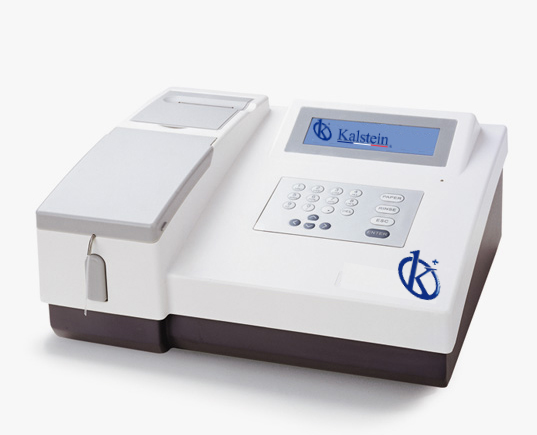
Maximizing Return on Investment in Chemical Analyzers: A Comprehensive Guide
In the competitive landscape of laboratory diagnostics, understanding how to maximize the return on investment (ROI) when selecting chemical analyzers is pivotal for operational efficiency and financial sustainability. This article aims to provide laboratory professionals with insights into cost-benefit analysis, comparing various models of chemical analyzers, and identifying best practices for achieving optimal results.
Understanding ROI and Cost-Benefit Analysis for Chemical Analyzers
Return on investment (ROI) in the context of chemical analyzers involves evaluating the financial returns relative to the costs incurred in acquiring and operating these devices. A thorough cost-benefit analysis incorporates initial capital expenditure (CAPEX), operating expenses (OPEX), maintenance costs, and the potential revenue generated through increased testing capabilities. By calculating ROI, laboratories can make informed decisions that align with their strategic goals.
Key Factors Influencing ROI for Chemical Analyzers
Several factors can significantly impact the ROI for chemical analyzers:
- Initial Costs: The upfront purchase price of the analyzer, including installation and training.
- Operational Efficiency: The analyzer's throughput and speed, affecting how many tests can be performed in a given timeframe.
- Accuracy and Precision: Reliable results can reduce re-runs and enhance laboratory credibility.
- Maintenance Expenses: Ongoing costs associated with servicing the equipment and procuring consumables.
- Market Demand: The ability of the laboratory to leverage increased testing capacity to attract more clients.
Comparison of Available Models
| Model | CAPEX (USD) | Cost per Test (USD) | Payback (Months) | Best for |
|---|---|---|---|---|
| YR05115 | 800.00 | 5.00 | 4 | Small laboratories with moderate testing demands |
| YR05114 | 950.00 | 4.50 | 5 | Versatile use in various chemical analyses |
| YR06092 | 150.00 | 3.00 | 2 | Field applications with portability needs |
| YR06075 | 12,500.00 | 1.50 | 10 | High-throughput laboratories requiring efficiency |
| YR05116 | 1,300.00 | 4.00 | 6 | Advanced analysis with real-time data visualization |
| YR06078 | 1,100.00 | 3.50 | 5 | Flexible testing needs with advanced features |
Common Mistakes and How to Avoid Them
To optimize ROI, laboratories often encounter pitfalls that can undermine their investment:
- Underestimating Total Cost of Ownership: It is critical to consider all costs associated with the analyzer beyond the initial purchase price, including maintenance and consumables.
- Neglecting Training Needs: Ensuring that staff are adequately trained to operate the equipment can prevent errors and enhance productivity.
- Inadequate Technical Support: Selecting models with strong manufacturer support can mitigate downtime and maximize operational capacity.
- Ignoring Future Scalability: Choose models that can accommodate future testing demands to avoid costly upgrades.
Maximizing Productivity with Chemical Analyzers
A significant component of ROI is the productivity and throughput of your chemical analyzer. The YR06075 model, for instance, can perform up to 560 tests per hour, making it ideal for high-demand environments. This high throughput not only enhances revenue generation but also reduces the time needed for results delivery, adding value to the laboratory’s service.
Cost-Benefit Analysis: A Practical Approach
To effectively analyze the cost-benefit of different chemical analyzers, a systematic approach should be taken:
- Define Objectives: Outline what you aim to achieve with your analyzer, such as test volume or specific analyses.
- Gather Data: Collect information on each model’s costs, performance metrics, and expected revenue generation.
- Analyze Scenarios: Create different testing scenarios based on historical lab data to simulate potential outcomes.
- Calculate ROI: Use the formula: ROI = (Net Profit / Total Investment) x 100 to evaluate potential models.
Future Trends in Chemical Analyzers
As technology evolves, so does the field of chemical analysis. Emerging trends that may impact ROI include:
- Automation and Integration: Increased automation will reduce labor costs and enhance consistency in results.
- Smart Technologies: IoT-enabled devices can provide real-time data and predictive maintenance, further maximizing ROI.
- Sustainability Initiatives: Eco-friendly analyzers can lower operational costs and improve your laboratory's marketability.
Frequently Asked Questions
What is the average ROI for chemical analyzers in laboratories?
The average ROI for chemical analyzers varies widely, but models like YR06075, with a payback period of about 10 months, are designed to optimize financial returns through high throughput and reliability.
How does investment in a semi-automatic chemistry analyzer affect lab efficiency?
Investing in a semi-automatic chemistry analyzer such as the YR05116 can enhance lab efficiency by providing real-time data visualization, which improves decision-making and workflow.
Which factors should be considered when calculating ROI for chemical analyzers?
When calculating ROI for chemical analyzers, consider factors such as CAPEX, OPEX, test throughput, and maintenance costs, as seen in models like the YR06092, which also offers a low operating cost of $3 per test.
What maintenance costs can be expected for the YR05115 model?
Maintenance costs for the YR05115 model are generally low, and budgeting around 5% of its initial cost annually is advisable, ensuring operational efficiency and minimizing downtime.
How can I ensure high throughput in my chemical analysis lab?
High throughput can be ensured by selecting high-capacity models like the YR06075, which can perform 560 tests per hour, along with optimizing workflows and staffing effectively.
What are the best practices for selecting a chemical analyzer for ROI maximization?
Best practices include conducting a thorough cost-benefit analysis, ensuring compatibility with existing systems, and considering support and training services offered by the manufacturer of the chemical analyzers.
How to evaluate the long-term financial impact of a chemical analyzer?
To evaluate the long-term financial impact, analyze total costs over its lifespan, including maintenance, consumables, and expected revenue based on test throughput, specifically with models like YR05114.
What role does training play in maximizing ROI for chemical analyzers?
Training is crucial for maximizing ROI, as proper use of devices like the YR06078 can reduce operational errors, enhance productivity, and ultimately lead to increased test accuracy and revenue.
If you are looking for a fusion of innovation and quality, you have come to the right place. At Kalstein, we offer you the luxury of exploring our exclusive catalog of laboratory equipment. We manufacture every device to the highest standards of excellence. Our intuitive and seamless online purchasing channels are designed for your convenience, securing the most competitive prices. Hesitate no longer — we bring science to life, it is time to become part of our community.