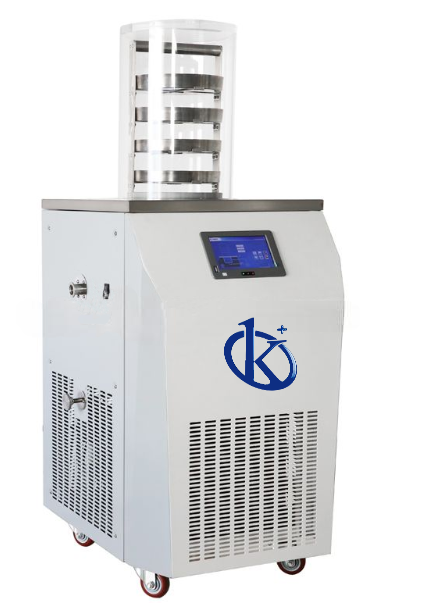
Maximizing ROI and Cost-Benefit Analysis for Vertical Laboratory Freeze Dryers
In today's laboratory environment, financial efficiency is as critical as scientific precision. Understanding the return on investment (ROI) and conducting a comprehensive cost-benefit analysis are essential for laboratory professionals, particularly regarding major equipment like vertical laboratory freeze dryers. This article dives deep into these financial aspects as they relate to various models of vertical freeze dryers, helping laboratory managers make informed purchasing decisions while enhancing laboratory productivity.
Understanding ROI and Cost-Benefit Analysis in Laboratory Settings
ROI is a key performance indicator that helps laboratory professionals measure the efficiency of an investment. It is calculated by dividing the net profit of the investment by the total costs associated with that investment, expressed as a percentage. A positive ROI indicates that the investment has generated more money than it cost. On the other hand, a cost-benefit analysis considers the financial costs and benefits associated with an investment, providing a broader perspective on its value.
In the context of vertical laboratory freeze dryers, a thorough understanding of ROI and cost-benefit analysis can lead to better budgeting decisions, enhanced financial forecasting, and improved operational efficiency. This is particularly important when considering the upfront cost of equipment against potential savings and benefits over time.
Key Factors Influencing ROI for Vertical Laboratory Freeze Dryers
Several factors influence the ROI for vertical laboratory freeze dryers, including acquisition costs, operational costs, maintenance expenses, and the efficiency of the freeze-drying process. Understanding these factors is essential for laboratory professionals looking to optimize their equipment investments.
Acquisition Costs
The initial purchase price of freeze dryers, such as the Vertical Electric Heating Laboratory Freeze Dryer YR05198 and YR05985-2, plays a vital role in determining ROI. The acquisition costs typically include not only the purchase price but also shipping, installation, and any necessary accessories. For instance, the prices for the YR05198 and YR05985-2 are approximately $4,392 and $21,000, respectively.
Operational Costs
Operational costs encompass energy consumption, maintenance, and consumables required for the freeze-drying process. The energy efficiency of a model can significantly impact these costs. For example, YR05199 operates efficiently, consuming lower energy, thus reducing operational costs over time.
Maintenance Expenses
Regular maintenance is crucial for ensuring the longevity and efficiency of freeze dryers. Choosing models like YR05200, known for its reliability, can minimize unplanned downtime and reduce maintenance expenses. Forecasting maintenance needs can help in budgeting and managing operational costs effectively.
Comparison of Available Models
| Model | CAPEX (USD) | Cost per Test | Payback (months) | Recommended Scenario |
|---|---|---|---|---|
| YR05198 | 4392 | Variable | 12-18 | Small to medium labs |
| YR05199 | 4882 | Variable | 10-15 | Medium labs with high throughput |
| YR05200 | 4178 | Variable | 11-16 | Research environments |
| YR05201 | 5061 | Variable | 10-14 | High-demand laboratories |
| YR05985-1 | 16800 | Higher due to scale | 24-30 | High-volume production |
| YR05985-2 | 21000 | Higher due to scale | 22-28 | Industrial applications |
Analyzing Break-Even Points and Payback Periods
Calculating the break-even point and payback period for each model is crucial for understanding when the investment will start generating returns. The payback period is calculated by dividing the initial investment (CAPEX) by the annual cash flow generated by the freeze dryer. For example, if a laboratory purchases the YR05198 for $4,392, and it generates $500 in savings annually, the payback period would be approximately 8.8 years.
Understanding these calculations provides clarity on how long it may take before seeing a return on the investment, which is essential for budgeting and resource allocation.
Common Mistakes and How to Avoid Them
Many laboratory professionals make mistakes when conducting ROI assessments or implementing freeze dryers. Here are some common pitfalls and how to sidestep them:
- Ignoring Total Cost of Ownership: Many only consider the initial purchase price without factoring in operational and maintenance costs.
- Overestimating Returns: It's crucial to base ROI predictions on realistic and grounded assumptions, not inflated expectations.
- Neglecting to Compare Models: Failing to evaluate different models can lead to suboptimal purchasing decisions.
- Inadequate Training: Neglecting to train staff on equipment can increase operational errors and decrease efficiency.
Frequently Asked Questions
What is the expected ROI for the Vertical Electric Heating Laboratory Freeze Dryer YR05198?
The expected ROI for the YR05198 can vary, but a well-calculated investment may see a return within 12-18 months if operational efficiencies are maximized.
How do operational costs affect the ROI of freeze dryers in laboratories?
Operational costs significantly impact ROI by affecting net profit; selecting energy-efficient models like YR05199 can minimize expenses and improve returns.
What are the common maintenance costs for the Vertical Laboratory Freeze Dryer models?
Maintenance costs can vary, but models like YR05200 are designed for reliability, reducing overall maintenance expenses, potentially under $500 annually.
How can I evaluate different vertical freeze dryer models for ROI?
Evaluating different models involves comparing CAPEX, operational costs, and expected savings; using a table similar to the one provided can help streamline this process.
What factors contribute to the cost per test for freeze dryers?
Factors influencing cost per test include energy consumption, maintenance, and materials used. The YR05985-2, for instance, may have a higher cost per test, but its efficiency compensates for it.
What performance metrics should I consider when assessing freeze dryers?
Key performance metrics include energy consumption, maintenance frequency, and throughput, all of which can impact ROI significantly for models like YR05199.
Which vertical laboratory freeze dryer model offers the best long-term investment?
Selecting the best investment often points to models like YR05201 that combine efficiency with lower operational costs, providing optimal returns over time.
How do I calculate the payback period for the YR05985-1 freeze dryer?
To calculate the payback period for the YR05985-1, divide the initial investment of approximately $16,800 by the annual savings generated to determine the time to recover costs.
If you are looking for a fusion of innovation and quality, you have come to the right place. At Kalstein, we offer you the luxury of exploring our exclusive catalog of laboratory equipment. We manufacture every device to the highest standards of excellence. Our intuitive and seamless online purchasing channels are designed for your convenience, securing the most competitive prices. Hesitate no longer — we bring science to life, it is time to become part of our community.