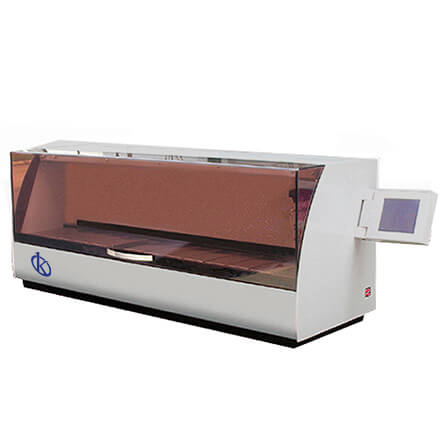
Maximizing ROI and Cost-Benefit Analysis for Automatic Slide Stainers
In today’s competitive laboratory environment, understanding the financial implications of laboratory equipment is crucial. Automatic slide stainers play a vital role in pathological anatomy labs by improving efficiency and throughput, yet their purchase involves significant investment. This article delves into how to maximize return on investment (ROI) and conduct a comprehensive cost-benefit analysis specifically tailored for automatic slide stainers. We will also compare various models and highlight common mistakes to avoid in the decision-making process.
Understanding ROI in Automatic Slide Stainers
When it comes to automatic slide stainers, ROI is a metric that evaluates the gain or loss generated relative to the amount invested. A positive ROI signifies that the benefits of using the equipment outweigh the costs, making it a financially viable option for labs. To calculate ROI, consider both capital expenditures (CAPEX) and operational expenditures (OPEX) associated with each model. The equation is as follows: ROI (%) = (Net Profit / Cost of Investment) x 100.
Key Cost Components of Automatic Slide Stainers
Before diving into the investment figures, it is essential to identify and analyze the critical cost components of automatic slide stainers. These components typically include:
- Initial purchase cost (CAPEX)
- Maintenance and repair costs (OPEX)
- Consumables such as reagents and slides
- Energy consumption
- Space and infrastructure modifications
Understanding these components helps in accurately estimating the total cost of ownership and aids in effective budgeting.
Comparing Automatic Slide Stainers: ROI Focus
To illustrate the differences in ROI potential among various models, we will compare three automatic slide stainers: YR435, YR435-1, and YR436-1. The following table outlines key specifications and financial implications.
| Model | CAPEX (USD) | Cost per Test (USD) | Payback Period (Months) | Recommended Scenario |
|---|---|---|---|---|
| YR435 | 3800.00 | 0.50 | 12 | High-volume clinical labs |
| YR435-1 | 10600.00 | 0.75 | 18 | Specialized staining applications |
| YR436-1 | 2800.00 | 0.45 | 10 | Small labs needing compact solutions |
Cost-Benefit Analysis Framework
Conducting a cost-benefit analysis involves comparing the expected benefits derived from the equipment against the costs incurred. Here, benefits can include labor savings, reduced reagent waste, and increased throughput. Below is a simplified framework for performing this analysis:
- Identify the objective of the investment
- Estimate potential benefits (e.g., time savings, efficiency gains)
- Calculate total costs over a specified period
- Determine the net benefit (Total Benefits - Total Costs)
- Evaluate the net benefit against the investment
Common Mistakes and How to Avoid Them
When investing in automatic slide stainers, laboratories often make several common mistakes that can hinder their ROI. Here are some pitfalls to avoid:
- Neglecting Total Cost of Ownership: Ensure to factor in maintenance and operational costs in addition to initial costs.
- Overlooking Training Needs: Labor costs may increase if staff does not receive proper training on the new equipment.
- Ignoring Scalability: Choose a model that can adapt to future lab needs, whether that means additional staining capacities or new protocols.
Best Practices for Maximizing ROI
To enhance ROI from automatic slide stainers, consider implementing the following best practices:
- Regularly review and update operational metrics to ensure equipment is used efficiently.
- Invest in staff training to minimize errors and downtime.
- Maintain an inventory of consumables to avoid production delays.
Comparison of Available Models
| Model | Number of Processing Cups | Capacity per Run | Dimensions (mm) | Weight (kg) |
|---|---|---|---|---|
| YR435 | 14 | 72 slides | 1180 × 420 × 470 | 70 |
| YR435-1 | 30 | 400 slides/hour | 1050 × 615 × 590 | N/A |
| YR436-1 | 15 | Compact size for workflow | 925 × 250 × 260 | 27 |
Frequently Asked Questions
What is the expected ROI from using an automatic slide stainer in a pathology lab?
Expect around 10-18 months payback period depending on the model. For instance, the YR435 model, with a CAPEX of $3800 and a cost per test of $0.50, can yield significant ROI in high-volume labs.
How much does maintenance cost for automatic slide stainers over a year?
Annual maintenance costs vary, typically ranging from $500 to $1000. Models like YR436-1, being compact, may incur lower maintenance costs while still delivering reliable performance.
Which model is best for high-volume testing in automatic slide staining?
The YR435-1 model is ideal for high-volume testing, with a capacity of 400 slides per hour, providing excellent throughput for clinical settings.
How can I calculate the cost per test for an automatic slide stainer?
To calculate the cost per test, divide total operational costs by the number of tests performed. For the YR435 model, if operational costs are $1000 for 2000 slides, the cost per test would be $0.50.
What factors influence the operational cost of automatic slide stainers?
Factors include consumables, energy usage, maintenance, and labor costs. Models like YR436-1 have lower energy consumption, which can reduce overall operational costs.
Which automatic slide stainer offers the best compact size for small labs?
The YR436-1 is designed for space efficiency, measuring only 925 × 250 × 260 mm, making it suitable for smaller laboratory environments without compromising on performance.
How can I identify the best automatic slide stainer for my lab needs?
Assess your lab’s volume, types of stains required, and budget. Models like YR435-1 cater to specialized staining needs, while YR435 serves high-throughput applications.
What is the importance of training when investing in automatic slide stainers?
Proper training ensures that users can operate the equipment efficiently, reducing errors and maximizing ROI. Without training, labs may face increased downtime and operational inefficiencies.
If you are looking for a fusion of innovation and quality, you have come to the right place. At Kalstein, we offer you the luxury of exploring our exclusive catalog of laboratory equipment. We manufacture every device to the highest standards of excellence. Our intuitive and seamless online purchasing channels are designed for your convenience, securing the most competitive prices. Hesitate no longer — we bring science to life, it is time to become part of our community.