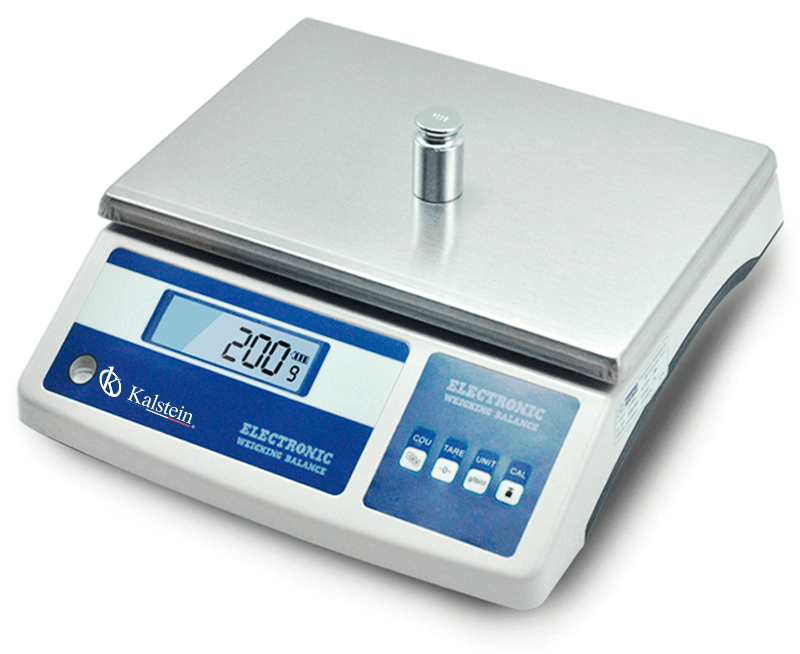
Maximizing ROI and Cost-Benefit Analysis for Industrial Balances in Laboratories
In the fast-paced world of laboratory operations, the efficient management of resources is paramount. Particularly in the context of industrial balances, understanding the return on investment (ROI) and conducting thorough cost-benefit analyses can significantly enhance operational efficiency. This article delves into various strategies to maximize ROI while examining multiple models of industrial balances, focusing on their unique attributes, costs, and the benefits they offer in laboratory environments.
Understanding ROI and Cost-Benefit Analysis in Laboratory Settings
ROI and cost-benefit analysis are critical tools that laboratory managers use to assess the financial viability of their equipment purchases. In the case of industrial balances, which are essential for accurate measurements, understanding how to quantify ROI can guide decision-making. The ROI formula can be expressed as: ROI (%) = (Net Profit / Cost of Investment) x 100. By applying this formula, laboratories can derive insights on the potential profitability of various models.
Key Factors Influencing ROI for Industrial Balances
Several factors impact the ROI of industrial balances, including initial investment costs, operational efficiencies, and maintenance expenses. For instance, models with higher precision may incur higher initial costs, but they often lead to increased accuracy and reduced material waste, ultimately providing a better ROI.
Comparison of Available Models
| Model | Capacity (kg) | Readability (g) | Cost (USD) | Best For |
|---|---|---|---|---|
| YR05606 | 11 | 1 | 60.00 | General laboratory use with moderate precision requirements |
| YR05607 | 16 | 1 | 60.00 | Medium-sized labs needing higher capacity |
| YR05608 | 21 | 1 | 65.00 | Laboratories requiring high capacity and precision |
| YR05609 | 31 | 1 | 65.00 | Heavy-duty applications with high load requirements |
| YR05610 | 5.1 | 0.1 | 55.00 | Small-scale operations requiring high precision |
| YR05611 | 11 | 0.1 | 65.00 | Versatile applications demanding accuracy in weighing |
| YR05612 | 16 | 0.1 | 65.00 | Research environments needing reliability and precision |
| YR05613 | 21 | 0.1 | 65.00 | Applications where both capacity and precision are crucial |
| YR05614 | 26 | 0.1 | 65.00 | High-capacity operations that require fine measurements |
Calculating the Payback Period
To effectively evaluate the ROI of industrial balances, laboratories should determine the payback period. This is the time it takes for the investment to pay for itself through savings and increased productivity. For example, if a laboratory spends $60 on an industrial balance and saves $15 per month in materials due to its precision, the payback period would be 4 months.
Common Mistakes and How to Avoid Them
One of the most frequent mistakes laboratories make is underestimating operational costs associated with industrial balances. It's vital to consider not only the purchase price but also maintenance, calibration, and indirect costs such as training. To avoid these pitfalls, conduct a thorough cost analysis that factors in all variables.
Best Practices for Cost-Benefit Analysis
When performing a cost-benefit analysis for industrial balances, it is essential to account for both tangible and intangible benefits. Tangible benefits include direct savings, while intangible benefits may involve improved accuracy leading to better quality results and customer satisfaction. Create a comprehensive table or chart to visualize these costs and benefits clearly.
Energy Consumption and Sustainability Considerations
In today's laboratories, sustainability is becoming increasingly important. When evaluating industrial balances, consider their energy consumption. Models such as YR05610 are noted for their energy-efficient designs, allowing labs to reduce their carbon footprint and operating costs.
Expanding the Value of Industrial Balances
Beyond initial cost savings, industrial balances can add value through improved data integrity and compliance with industry standards. By leveraging these balances, laboratories can ensure they meet rigorous quality control standards while optimizing their operations.
Frequently Asked Questions
How does the cost of an industrial balance affect laboratory ROI?
The cost of an industrial balance directly influences the ROI, as higher initial costs can lead to better accuracy and reduced waste over time. For example, investing in the YR05608 model can yield significant savings in material costs due to its precision, enhancing overall ROI.
What factors should be considered in a cost-benefit analysis for industrial balances?
In a cost-benefit analysis for industrial balances, consider acquisition costs, operational efficiency, maintenance expenses, and the potential savings from increased accuracy. For instance, the YR05609 model, while more expensive, can save money in the long run through its high capacity and reliability.
What maintenance costs should be anticipated for industrial balances?
Maintenance costs for industrial balances typically include calibration services, preventative maintenance, and repairs. The YR05611 model, known for its reliability, may require less frequent calibration, thereby reducing long-term maintenance costs.
How can energy efficiency impact the ROI of industrial balances?
Energy efficiency can significantly impact the ROI of industrial balances by reducing utility costs over time. Models like the YR05610 are designed with energy-efficient features, contributing to lower operational costs and improved sustainability in labs.
Which industrial balance model is best for high-capacity needs?
The YR05609 model is ideal for high-capacity needs, with a weight capacity of 31 kg and 1 g readability, making it suitable for heavy-duty applications where precision and reliability are paramount.
What is the impact of precision on the cost-benefit analysis of balances?
Precision has a significant impact on cost-benefit analysis; higher precision balances reduce material consumption and improve results consistency. The YR05610, with its 0.1 g readability, offers enhanced precision that can justify a higher initial investment with savings in material costs.
How do industrial balances support compliance with laboratory standards?
Industrial balances help support compliance with laboratory standards by providing accurate measurements that are essential for quality control. Models such as YR05608 can aid in meeting compliance requirements through their high precision and reliability.
What ROI can be expected from integrating industrial balances in laboratory operations?
Integrating industrial balances in laboratory operations can yield varying ROI depending on usage efficiency. For example, a laboratory may experience a payback period of just 4 months with models like YR05606 due to enhanced accuracy and reduced waste.
If you are looking for a fusion of innovation and quality, you have come to the right place. At Kalstein, we offer you the luxury of exploring our exclusive catalog of laboratory equipment. We manufacture every device to the highest standards of excellence. Our intuitive and seamless online purchasing channels are designed for your convenience, securing the most competitive prices. Hesitate no longer — we bring science to life, it is time to become part of our community.