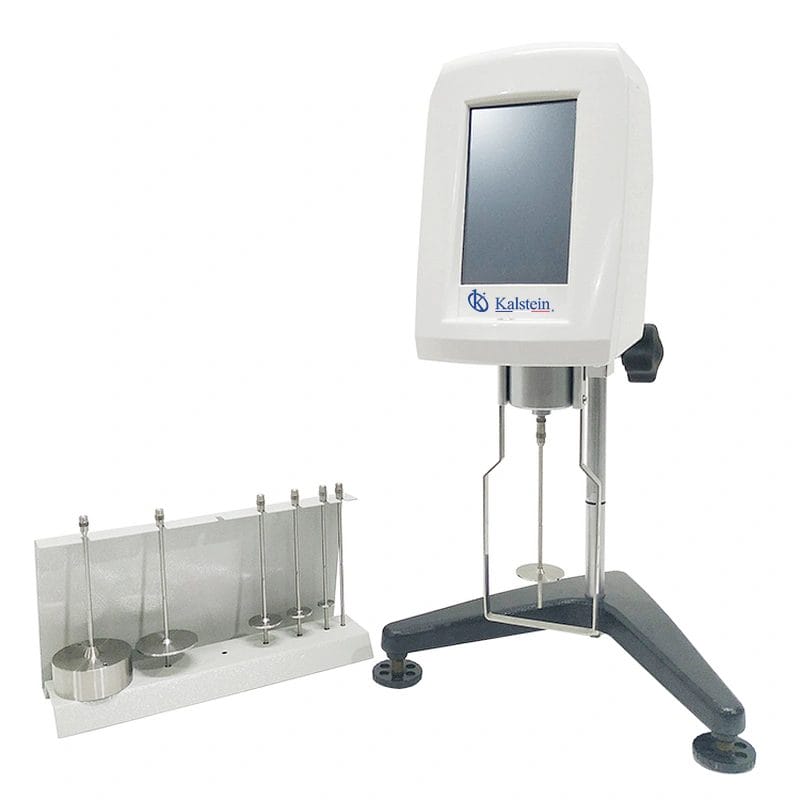
Understanding the Operating Principle and Scientific Foundation of the YR05862 Viscometer
The YR05862 Viscometer is a state-of-the-art instrument used for measuring the viscosity of liquids in various applications ranging from industrial to clinical settings. This article delves into the operating principles and scientific foundations that make the YR05862 a versatile tool in the laboratory.
Principle of Operation of the YR05862 Viscometer
The YR05862 operates on the principle of rotational viscometry. This method involves the use of rotating spindles that are immersed in the test liquid. As the spindle rotates, it exerts a shear force on the fluid, allowing for the measurement of viscosity based on the resistance encountered by the spindle. The viscosity is expressed in mPa·s (millipascal-seconds) or cps (centipoise), providing a clear understanding of the fluid's flow characteristics.
The rotational speed can be adjusted, allowing for a variety of spindle configurations to be tested, which is crucial for obtaining accurate readings across different liquid types. The YR05862 can measure viscosities ranging from 1 to 2,000,000 mPa·s, making it suitable for both low-viscosity and highly viscous samples.
Scientific Foundations: Fluid Mechanics
The measurement of viscosity is rooted in fluid mechanics, particularly the study of how fluids behave under various conditions. Viscosity itself is a measure of a fluid's resistance to deformation and flow. In the context of the YR05862, the relationship between shear stress and shear rate is essential in defining viscosity.
The equation that governs this relationship is given by:
τ = η * (du/dy)
Where:
- τ = shear stress (Pa)
- η = dynamic viscosity (mPa·s)
- du/dy = shear rate (s-1)
This fundamental equation illustrates how the YR05862 viscometer quantifies a fluid's viscosity by measuring the shear stress applied and the resulting shear rate produced by the rotation of the spindle.
Key Design Features of the YR05862
The design of the YR05862 incorporates several key features that enhance its performance and usability:
- High Precision Measurement: The YR05862 is designed for high accuracy with a precision of ±1% in measurement, ensuring reliable results across a wide range of samples.
- Automatic Detection: The instrument features automatic detection of spindle speed, adapting to various viscosities effectively, which vastly reduces user error during operation.
- LCD Display: The user-friendly LCD display allows operators to easily read and interpret results, enhancing the overall user experience.
Calibration and Initial Setup of the YR05862
To ensure accurate measurements, proper calibration of the YR05862 is essential. Calibration should be performed using standard viscosity fluids of known values. Here’s a step-by-step guide:
- Unbox and Inspect: Ensure that all components are included and that there’s no visible damage.
- Set Up: Place the viscometer on a stable surface to avoid vibration, which can affect readings.
- Power Up: Connect the device to a suitable power supply and turn it on.
- Initial Calibration: Use standard fluids to calibrate the viscometer by adjusting settings as necessary until the readings match the known viscosity values of the calibration fluids.
- Validation: Perform a series of measurements on the calibration fluids to ensure consistency before proceeding with actual samples.
Interpreting Results from the YR05862
Accurate interpretation of results from the YR05862 Viscometer is critical for understanding fluid properties. Viscosity readings can vary significantly based on temperature and composition of fluids. Here are key points to consider:
- Units of Measurement: Viscosity is typically reported in mPa·s or cps. Understanding these units is crucial for effective communication of results.
- Normal Ranges: Different fluids have characteristic viscosity ranges. For instance, water at room temperature has a viscosity of about 1 mPa·s, whereas honey may have a viscosity exceeding 1,000 mPa·s.
- Error Bars: Including error bars in reports provides context to the reliability of the measurements and should be factored into result interpretation.
Technical Specifications of the YR05862
| Specification | Details |
|---|---|
| Model | YR05862 |
| Measurement Range | 1-2,000,000 mPa·s |
| Display Type | LCD |
| Spindle Specifications | 0, 1, 2, 3, 4, 21, 27, 28, 29 |
| Rotational Speed | 0.3/0.6/1.5/3/6/12/30/60 rpm/min |
| Interface | RS232 |
| Power Supply | AC 220V ± 10% 50 Hz ± 10% |
| Weight | 11 kg |
| Dimensions | 45 x 35 x 49 cm |
Frequently Asked Questions
What types of liquids can I measure with the YR05862 Viscometer?
The YR05862 is capable of measuring the viscosity of a wide range of liquids, from low-viscosity fluids like water to highly viscous materials like gels and pastes. It is essential to select the correct spindle for each type of liquid to ensure accurate measurements.
How often should the YR05862 be calibrated?
Calibration frequency can vary based on usage. It is recommended to calibrate the YR05862 every month or before significant measurement tasks, especially when measuring fluids with varying viscosities.
What maintenance is required for the YR05862 Viscometer?
Routine maintenance includes cleaning the spindles after use, checking for any wear or damage, and ensuring that the device is calibrated regularly. Following the manufacturer's instructions for care will prolong its lifespan.
How do I interpret the viscosity readings from the YR05862?
Viscosity readings are presented in mPa·s or cps. Understanding the specific viscosity range for the test liquid is crucial for accurate interpretation. Comparing results against known standards or typical values for similar liquids can provide additional context.
Can the YR05862 be used for quality control in a manufacturing process?
Yes, the YR05862 is suitable for quality control applications as it provides accurate and precise measurements of fluid viscosity, which can be critical in ensuring product consistency and quality in manufacturing processes.
What should I do if the YR05862 shows inconsistent readings?
If the device displays inconsistent readings, check for proper spindle selection, ensure that the viscometer is calibrated, and verify that the liquid sample is homogeneous and free from bubbles or particulates.
If you are looking for a fusion of innovation and quality, you have come to the right place. At Kalstein, we offer you the luxury of exploring our exclusive catalog of laboratory equipment. We manufacture every device to the highest standards of excellence. Our intuitive and seamless online purchasing channels are designed for your convenience, securing the most competitive prices. Hesitate no longer — we bring science to life, it is time to become part of our community.