How to Achieve Predictive Maintenance and Recommended Calibration for Industrial Ovens
Industrial ovens are critical components in various sectors, including manufacturing and laboratory environments. Ensuring their effectiveness through predictive maintenance and regular calibration is paramount. This article delves into how to establish a predictive maintenance strategy alongside recommended calibration schedules for different industrial ovens, focusing on specific models that can enhance operational efficiency.
Understanding Predictive Maintenance in Industrial Ovens
Predictive maintenance involves using data-driven insights to predict equipment failures before they occur. For industrial ovens, this means monitoring key performance indicators (KPIs) such as temperature accuracy, operational cycles, and equipment wear. By leveraging technology to analyze these metrics, facilities can minimize downtime and extend the lifespan of their ovens.
Importance of Regular Calibration in Industrial Ovens
Calibration is crucial for ensuring that industrial ovens operate within specified temperature ranges and maintain product quality. Regular calibration checks help in identifying deviations early, thereby preventing potential failures and ensuring compliance with industry standards. The recommended calibration frequency varies by model and usage, but a structured approach is essential for maintaining reliability.
Key Features of Industrial Ovens: Models Overview
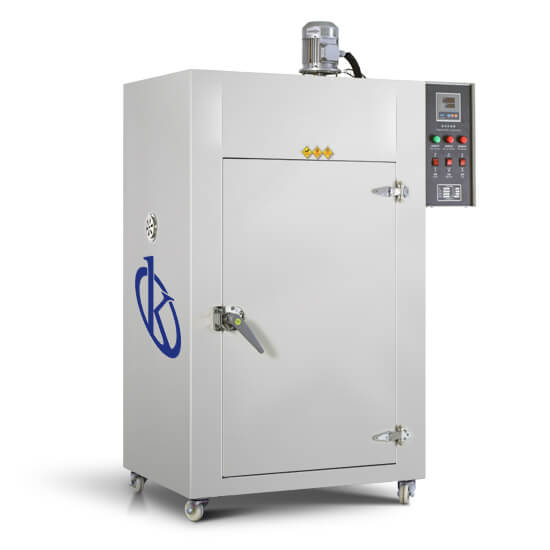
There are several models of industrial ovens, each with unique capabilities that contribute to predictive maintenance and calibration strategies. Below are four notable models and their features:
- Electric Heating Drying Stove YR05256 (A): Known for its intelligent temperature control and quick heating times, ideal for dehydration and drying tasks in industrial settings.
- Electric Heating Drying Stove YR05257-1 (A): Features a double-layer door and is suitable for extensive operations with high load capacities, making it perfect for batch production.
- Electric Heating Drying Stove YR05258 (SS): Offers a stainless-steel construction with excellent temperature uniformity, suitable for sensitive applications like electronics and jewelry.
- Electric Heating Drying Stove YR05259-1 (SS): Built for durability and efficiency, this model is designed for long-term continuous operation.
Comparison of Available Models
| Model | Temperature Range (℃) | Capacity (Liters) | Power (kW) | Best Use Case |
|---|---|---|---|---|
| YR05256-A | RT+5 to 250 | 300 | 4-6 | Dehydration and drying in industrial settings |
| YR05257-1-A | RT+5 to 250 | 864 | 8-12 | Batch production with high load capacity |
| YR05258-SS | RT+5 to 250 | 300 | 4-6 | Sensitive applications such as electronics |
| YR05259-1-SS | RT+5 to 250 | 864 | 8-12 | Long-term continuous operations |
Calibration Schedule: Best Practices
Establishing a calibration schedule is essential for maintaining accuracy in industrial ovens. A general guideline is to perform calibration checks every six months, but this can be adjusted based on usage and manufacturer recommendations.
It is advisable to keep detailed records of each calibration session, including deviations found, corrective actions taken, and subsequent performance checks. This ensures compliance and helps in troubleshooting any future issues.
Common Mistakes and How to Avoid Them
One of the most common mistakes in maintaining industrial ovens is neglecting the calibration schedule due to assumed reliability. Another mistake is overlooking the significance of environmental factors that can affect oven performance, such as humidity and room temperature. To avoid these pitfalls, implement a strict maintenance and calibration protocol, and regularly train staff on the procedures.
Predictive Maintenance Techniques for Industrial Ovens
Implementing predictive maintenance requires the integration of IoT solutions that can monitor ovens in real-time. These systems can alert personnel to abnormalities, such as temperature fluctuations or deviating power usage. Regularly analyzing data trends can also inform decisions about when to schedule maintenance or calibration.
Energy Efficiency and Environmental Considerations
Modern industrial ovens are designed with energy efficiency in mind. When planning predictive maintenance, consider how energy usage can be optimized. Implementing regular checks can significantly reduce energy costs and contribute to sustainability efforts within the organization.
Frequently Asked Questions
How often should industrial ovens be calibrated to ensure accuracy?
Calibration of industrial ovens should generally occur every six months. However, specific models like the YR05257-1 (A) may require more frequent checks based on usage and environmental factors to maintain accuracy.
What is the best way to implement predictive maintenance for industrial ovens?
Implementing predictive maintenance involves using real-time data monitoring. For instance, the YR05258 (SS) model can be equipped with sensors that track temperature stability, allowing you to anticipate potential failures.
Which industrial oven model is best for high-capacity batch production?
The Electric Heating Drying Stove YR05257-1 (A) is best for high-capacity batch production, with a capacity of 864 liters and a power range of 8-12 kW, making it suitable for continuous operations.
What are the key indicators for predictive maintenance in industrial ovens?
Key indicators for predictive maintenance include temperature fluctuations and power consumption metrics. Monitoring these indicators in models like the YR05256 (A) can help identify issues before they lead to equipment failure.
How can calibration contribute to compliance with industry standards?
Regular calibration ensures that industrial ovens operate within specified parameters, helping facilities comply with industry standards such as ISO 17025. This is particularly important for models like YR05258 (SS), used in sensitive applications.
What measures can enhance the energy efficiency of industrial ovens?
To enhance energy efficiency, consider scheduling regular maintenance and ensuring proper calibration. Utilizing the Electric Heating Drying Stove YR05256 (A) can further optimize energy consumption through its intelligent control systems.
What documentation is essential for maintaining industrial ovens?
Documentation should include calibration records, maintenance logs, and performance metrics. This data is critical for models like YR05257-1 (A) to ensure compliance and facilitate predictive maintenance planning.
How can predictive maintenance reduce operational costs for industrial ovens?
Predictive maintenance reduces operational costs by minimizing unplanned downtime and extending equipment life. By monitoring models like the YR05259-1 (SS), facilities can avoid costly repairs and optimize their operational efficiency.
If you are looking for a fusion of innovation and quality, you have come to the right place. At Kalstein, we offer you the luxury of exploring our exclusive catalog of laboratory equipment. We manufacture every device to the highest standards of excellence. Our intuitive and seamless online purchasing channels are designed for your convenience, securing the most competitive prices. Hesitate no longer — we bring science to life, it is time to become part of our community.