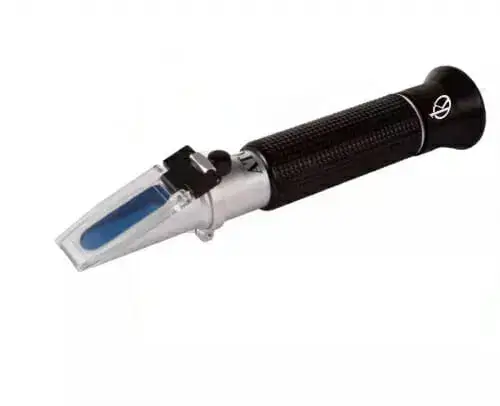
Understanding ROI and Cost-Benefit Analysis for Laboratory Brix Refractometers
In the realm of laboratory operations, the efficiency and efficacy of instruments directly influence overall productivity and profitability. Among these instruments, Brix refractometers play a critical role in measuring sugar concentrations in various agricultural and food applications. This article delves into the return on investment (ROI) and cost-benefit analysis associated with Brix refractometers, providing insights that laboratory professionals can leverage to make informed purchasing decisions.
Importance of ROI and Cost-Benefit Analysis in Laboratories
ROI and cost-benefit analysis are essential tools for evaluating the financial implications of purchasing new laboratory equipment, particularly in industries where precision and accuracy are paramount. Understanding these metrics helps laboratories balance initial capital expenditures (CAPEX) against operational expenditures (OPEX) and long-term benefits.
With Brix refractometers, laboratories can significantly enhance their testing capabilities, leading to improved product quality and consistency. However, the decision to invest must be backed by comprehensive financial analysis to ensure that the investment aligns with the laboratory's economic goals.
Comparison of Available Models
| Model | Measurement Range | Minimum Division | Price (USD) | Best Use Scenario |
|---|---|---|---|---|
| YR05872 | 0-5% Brix | 0.1% Brix | 10.00 | Small-scale fruit testing |
| YR05873 | 0-10% Brix | 0.1% Brix | 10.00 | Vegetable testing |
| YR05874 | 0-18% Brix | 0.1% Brix | 10.00 | Home brewing |
| YR05875 | 0-20% Brix | 0.1% Brix | 9.50 | Food production |
| YR05876 | 0-32% Brix | 0.1% Brix | 9.50 | General laboratories |
| YR05877 | 0-5% Brix | 0.1% Brix | 10.00 | Specialty fruit analysis |
Analyzing the Cost-Benefit of Each Model
When evaluating Brix refractometers, it's essential to consider not only the purchase price but also the potential return on investment. Each model serves different needs and capacities, which can influence operational costs and efficiencies.
For instance, the YR05876 model offers a wider measurement range of up to 32% Brix, making it suitable for various applications in larger laboratories. This versatility could justify its cost compared to smaller models like the YR05872, which is ideal for specific, low-volume tasks.
Quantitative Breakdown of Costs and Expected Returns
Understanding the quantitative aspects of ROI is vital for laboratory managers. Below is a table that illustrates the cost considerations alongside expected returns based on usage types:
| Model | Initial Investment (USD) | Average Tests per Month | Cost per Test (USD) | Payback Period (Months) |
|---|---|---|---|---|
| YR05872 | 10.00 | 100 | 0.10 | 1 |
| YR05873 | 10.00 | 150 | 0.07 | 1 |
| YR05874 | 10.00 | 200 | 0.05 | 1 |
| YR05875 | 9.50 | 250 | 0.04 | 0.75 |
| YR05876 | 9.50 | 300 | 0.03 | 0.50 |
| YR05877 | 10.00 | 120 | 0.08 | 1.25 |
Common Mistakes and How to Avoid Them
In the process of selecting a Brix refractometer, laboratories often make several common mistakes that can lead to suboptimal purchasing decisions. Here are key pitfalls and strategies to avoid them:
- Overlooking Specifications: Ensure that the chosen model meets the required measurement ranges for your specific testing needs.
- Ignoring Long-Term Costs: Consider not just the upfront cost but also ongoing expenses such as maintenance and calibration.
- Underestimating Usage Rates: Analyze your laboratory's testing volume to select a model that can handle your throughput effectively.
- Neglecting User Training: Ensure that staff are adequately trained in using the refractometers to avoid operational inefficiencies.
Frequently Asked Questions
How can I evaluate the ROI of a Brix refractometer in my lab?
To evaluate the ROI of a Brix refractometer, consider initial investment costs like the YR05875, operational costs, and the number of tests conducted monthly. Calculate the cost per test and compare it to the potential revenue generated from improved product quality.
What are the ongoing maintenance costs for Brix refractometers?
Ongoing maintenance costs for Brix refractometers generally include periodic calibration and servicing, which can vary by model. For instance, models like YR05876 may require less frequent calibration due to their robust design.
Which Brix refractometer model is best for small-scale testing?
The YR05872 model is ideal for small-scale testing with a measurement range of 0-5% Brix, suitable for individual fruit assessments without extensive investment.
How does the measurement range affect the cost-benefit of Brix refractometers?
A broader measurement range, such as that offered by the YR05876 model, allows for more diverse applications within the same investment, enhancing the overall cost-benefit ratio by reducing the need for multiple devices.
What factors contribute to determining the cost per test for a Brix refractometer?
Factors that influence the cost per test include the initial purchase price, the expected lifespan of the device, and the frequency of testing. For example, the YR05875 model offers a low cost per test due to its competitive price and efficiency in high-volume testing scenarios.
How frequently should Brix refractometers be calibrated?
Calibration frequency for Brix refractometers typically ranges from monthly to quarterly, depending on usage intensity and model specifications. Models like YR05874 are often more stable and require less frequent calibration.
What advantages do automatic temperature compensation (ATC) features provide?
Automatic temperature compensation in models like the YR05876 allows for accurate measurements regardless of temperature fluctuations, minimizing errors that can affect test results and enhancing the reliability of data.
How do I choose between different models of Brix refractometers for my laboratory?
Choosing between models requires evaluating your specific testing needs, volume, and measurement ranges. For example, if your lab focuses on high-sugar content solutions, the YR05875 could be the most effective choice.
If you are looking for a fusion of innovation and quality, you have come to the right place. At Kalstein, we offer you the luxury of exploring our exclusive catalog of laboratory equipment. We manufacture every device to the highest standards of excellence. Our intuitive and seamless online purchasing channels are designed for your convenience, securing the most competitive prices. Hesitate no longer — we bring science to life, it is time to become part of our community.