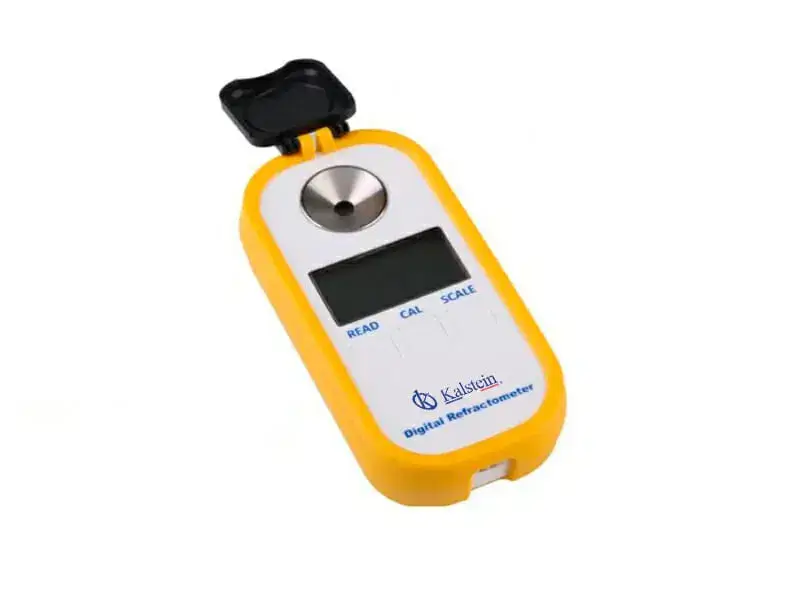
Understanding ROI and Cost-Benefit Analysis for Digital BRIX Refractometers in Laboratories
As laboratories continue to seek efficiency and precision in their processes, understanding the return on investment (ROI) and conducting a thorough cost-benefit analysis for equipment such as digital BRIX refractometers becomes essential. These instruments are pivotal in analyzing the concentration of soluble solids in various aqueous solutions critical for numerous applications, including food and beverage production, chemical analysis, and quality control.
Framing the Focus: ROI and Cost-Benefit for Digital BRIX Refractometers
Digital BRIX refractometers, like the YR05944 and YR05945, offer unique advantages for laboratories looking to measure sugar concentrations accurately. Understanding their ROI and cost-benefit implications can help laboratory managers make informed purchasing decisions that align with their operational goals.
Comparison of Available Models
| Model | Measurement Range | Price (USD) | Best For |
|---|---|---|---|
| YR05944 | Brix: 0.0-50.0% | 76.00 | Sweetness measurement in juices and syrups |
| YR05945 | Brix: 0.0-90.0% | 95.00 | High sugar content solutions like soft drinks |
| YR05946 | Index of refraction: 1.3330-1.5177nD | 95.00 | General laboratory use and broad applications |
| YR05947 | Dextran: 0.0-10.6% | 95.00 | Tests involving dextran solutions |
| YR05948 | Fructose: 0.0-68.9% | 95.00 | Sweetener analysis and food diagnostics |
| YR05949 | Glucose: 0.0-59.9% | 95.00 | Health applications and nutritional analysis |
Understanding the Cost-Benefit Analysis
The cost-benefit analysis (CBA) of digital BRIX refractometers involves assessing the total costs associated with purchasing and maintaining a refractometer against the benefits derived from its use. This includes direct costs such as purchase price and indirect costs like training and calibration.
Direct Costs
The direct costs are straightforward and include the purchase of the refractometer, which can vary significantly based on model capabilities. For instance, the YR05944 retails for $76, while the more advanced YR05945 costs $95. These differences can affect budget allocations depending on laboratory priorities.
Indirect Costs
Indirect costs such as calibration, maintenance, and potential downtime must also be considered in the CBA. A refractometer’s calibration frequency can impact overall productivity; therefore, models like the YR05946, which can measure various indices of refraction, may provide more versatility and longer periods between maintenance checks.
Measuring ROI: Quantitative Breakdown
ROI calculations help laboratory managers understand the financial impact of their purchasing decisions over time. The ROI formula is calculated as follows:
ROI (%) = (Net Profit / Cost of Investment) x 100
For example, if a laboratory invests $95 in the YR05945 and it saves $300 annually in operational costs, the ROI can be calculated as:
Net Profit = Savings - Cost = $300 - $95 = $205
ROI = ($205 / $95) x 100 = 215.79%
Common Mistakes and How to Avoid Them
When conducting a cost-benefit analysis, laboratories often overlook hidden costs or do not adequately anticipate the benefits that high-quality refractometers provide. It is essential to factor in operational efficiency, less waste, and improved accuracy as part of the benefits analysis.
How to Analyze ROI Over Time
Analyzing ROI over time involves tracking the performance of the refractometer against the initial projections made during the purchase decision. Establish key performance indicators (KPIs) such as cost per test and overall accuracy to maintain clarity on the refractometer's impact on laboratory productivity.
Frequently Asked Questions
What type of ROI can be expected from the YR05944 digital BRIX refractometer compared to others?
The YR05944 digital BRIX refractometer provides an excellent ROI, particularly for small laboratories focusing on fruit juice testing, due to its low purchase price of $76 and minimal operational costs. By reducing operational waste, laboratories can foresee a high return on their investment.
How does the YR05945 model enhance cost-benefit analysis in high-volume laboratories?
The YR05945 model, with a measurement range of 0.0-90.0%, allows for efficient analysis of high-sugar content solutions, enabling laboratories to optimize resource usage and reduce costs associated with material waste, thus enhancing overall cost-benefit outcomes.
Which model is most effective for analyzing fructose content in laboratory settings?
The YR05948 model, designed for fructose analysis with a range of 0.0-68.9%, effectively supports laboratories in conducting detailed sugary content analyses. Its specialized functionality allows for accurate readings and substantial savings in testing resources.
What hidden costs should laboratories consider when purchasing a digital BRIX refractometer?
When purchasing a digital BRIX refractometer, laboratories should consider hidden costs such as maintenance, calibration expenses, and training. For instance, the YR05946 model may require more frequent calibration if used across diverse samples, impacting operational efficiency.
How can ROI from digital BRIX refractometers be maximized over time?
To maximize ROI, laboratories should ensure regular maintenance and calibration of their digital BRIX refractometers, such as the YR05945. Implementing a preventive maintenance schedule can help in reducing downtime and extending the equipment's lifespan, leading to better performance.
How does accurate measurement of Brix levels contribute to a laboratory's cost savings?
Accurate measurement of Brix levels using models like the YR05944 minimizes errors in formulation, which can lead to waste reduction and better quality control. This accuracy supports overall cost savings by optimizing resource allocation and minimizing rework.
What is the expected payback period for investing in a digital Brix refractometer?
The expected payback period for investing in a digital BRIX refractometer, like the YR05945, can be as short as 6-12 months, depending on the laboratory's sample throughput and operational efficiency improvements. Accurate measurements lead to significant savings in material costs.
Which laboratory scenarios are best suited for the YR05946 model?
The YR05946 model is best suited for laboratories requiring flexible measurements across various solutions, enhancing its utility in diverse applications. It allows laboratories to maximize their analytical capabilities while controlling costs, improving the overall cost-benefit ratio.
If you are looking for a fusion of innovation and quality, you have come to the right place. At Kalstein, we offer you the luxury of exploring our exclusive catalog of laboratory equipment. We manufacture every device to the highest standards of excellence. Our intuitive and seamless online purchasing channels are designed for your convenience, securing the most competitive prices. Hesitate no longer — we bring science to life, it is time to become part of our community.