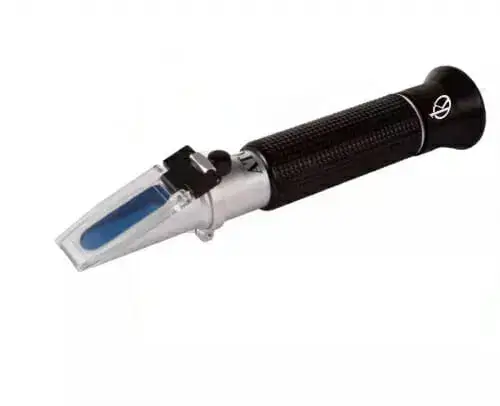
Understanding ROI and Cost-Benefit Analysis for Salinity Refractometers
In the ever-evolving landscape of laboratory equipment, a thorough understanding of return on investment (ROI) and cost-benefit analysis is critical for making informed purchasing decisions. This article delves into the world of salinity refractometers, a vital tool for measuring the concentration of salt in various applications, and provides insights into their economic impact on laboratory operations.
Salinity Refractometers: An Overview
Salinity refractometers are precision instruments designed to measure the concentration of salts in aqueous solutions, particularly in marine and clinical laboratories. Commonly used for quality control and research purposes, these devices offer reliable measurements of both specific gravity and salinity levels.
The significance of salinity refractometers lies in their ability to provide direct readings, which help laboratories maintain standards for water quality and chemical composition. With models such as YR05887, YR05888, YR05913, and YR05914, laboratories can ensure accurate and consistent results.
Determining ROI and Cost-Benefit Analysis for Salinity Refractometers
When evaluating the ROI of salinity refractometers, laboratories must consider several factors, including initial capital expenditure (CAPEX), operational costs (OPEX), and overall laboratory efficiency. Understanding these components can help professionals make an informed decision regarding which model to invest in.
The following factors should be considered:
- Initial Cost: The purchase price of the salinity refractometer. For example, the YR05887 and YR05888 models are priced at $9.50 each.
- Operational Costs: Expenses incurred in maintaining and operating the refractometers, including calibration, consumables, and labor costs.
- Throughput: The number of tests that can be conducted within a specified period, which directly influences the cost per test.
- Depreciation: The decrease in value of the equipment over its lifespan impacts the overall ROI.
Comparison of Available Models
| Model | Price (USD) | Measurement Range | Specific Gravity Range | Best for |
|---|---|---|---|---|
| YR05887 | $9.50 | 2-4% (20-40 ppt) | 1.015-1.030 | Marine laboratories |
| YR05888 | $9.50 | 0-4% (0-40 ppt) | 1.000-1.030 | Clinical testing |
| YR05913 | $9.50 | 2-4% (20-40 ppt) | 1.015-1.030 | Quality control |
| YR05914 | $9.50 | 0-4% (0-40 ppt) | 1.000-1.030 | Research applications |
Common Mistakes and How to Avoid Them
Laboratories often encounter several common mistakes when evaluating salinity refractometers. Some of these include:
- Overlooking Calibration Needs: Regular calibration is vital for ensuring the accuracy of measurements. Failing to calibrate can lead to erroneous results and potential financial losses.
- Ignoring Specific Application Requirements: Different models serve various purposes. For instance, YR05888 is ideal for clinical applications, while YR05914 is better suited for research. Laboratories must choose models that align with their specific needs.
- Neglecting ROI Analysis: Many labs fail to perform a comprehensive ROI analysis before making a purchase, which can result in inadequate investment decisions.
Economic Implications of Salinity Refractometers in Laboratories
The economic implications of utilizing salinity refractometers extend beyond the initial investment. A detailed cost-benefit analysis can reveal long-term savings and efficiencies. Here are critical considerations:
- Cost per Test: Understanding the cost per test can help laboratories assess the financial viability of using salinity refractometers.
- Efficiency Gains: Enhanced accuracy and quicker test results can lead to increased productivity, allowing for more samples to be processed in less time.
- Durability and Maintenance: The longevity of equipment impacts the total cost of ownership; investing in high-quality refractometers can reduce replacement frequency.
FAQs
How does the cost of salinity refractometers impact laboratory budgeting?
The initial cost of salinity refractometers, such as the YR05887 and YR05888 priced at $9.50, significantly affects laboratory budgeting, influencing both CAPEX and OPEX calculations.
What are the key specifications to consider for salinity refractometers?
Key specifications include measurement range, specific gravity range, and calibration requirements, particularly for models like YR05913 that focus on quality control in marine laboratories.
How can operational costs be minimized when using salinity refractometers?
To minimize operational costs, laboratories should focus on efficient calibration practices and select models like the YR05914 that are designed for specific applications, ensuring longevity and reduced maintenance costs.
Which salinity refractometer is best for marine laboratory applications?
The YR05887 model is specifically designed for marine applications, making it an ideal choice for laboratories focused on testing the salinity of seawater and brine samples.
What factors contribute to the ROI of salinity refractometers?
Factors such as purchase price, operational efficiency, throughput, and maintenance costs all contribute to the ROI of salinity refractometers, with models like YR05888 providing a balance of cost and performance.
How does the choice of salinity refractometer impact testing accuracy?
The choice of salinity refractometer directly impacts testing accuracy; models like YR05914 offer specific features that enhance precision, crucial for research and quality control applications.
Can the use of salinity refractometers lead to increased laboratory productivity?
Yes, using salinity refractometers can significantly enhance laboratory productivity by allowing faster analysis times, especially with efficient models like the YR05888, enabling more tests to be completed in a shorter period.
What is the importance of regular calibration for salinity refractometers?
Regular calibration is essential for maintaining the accuracy of salinity refractometers like the YR05913, ensuring reliable results and mitigating the risk of costly errors in laboratory operations.
For those interested in acquiring salinity refractometers or other laboratory equipment, we invite you to request a quote on our exclusive catalog.
If you are looking for a fusion of innovation and quality, you have come to the right place. At Kalstein, we offer you the luxury of exploring our exclusive catalog of laboratory equipment. We manufacture every device to the highest standards of excellence. Our intuitive and seamless online purchasing channels are designed for your convenience, securing the most competitive prices. Hesitate no longer — we bring science to life, it is time to become part of our community.