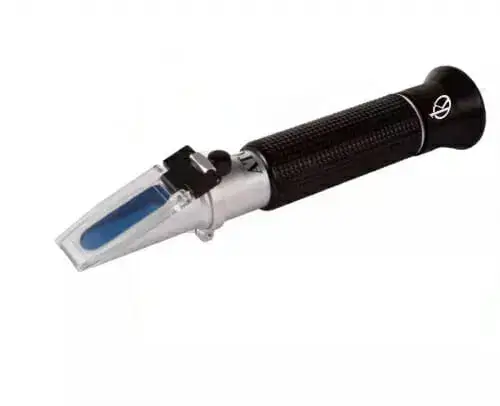
Salinity Refractometers: Best Techniques and Protocols 2026
Salinity refractometers are vital tools in laboratories, particularly for those involved in marine research, aquaculture, and various industrial applications. These devices measure the concentration of salt in solutions, providing crucial data for quality control in various fields. The following sections will cover everything you need to know about salinity refractometers, their applications, techniques, and best practices for the year 2026.
What is it used for in 2026
In 2026, salinity refractometers are extensively used in laboratories to determine the salinity levels in seawater, brine, and other saltwater solutions. They play a significant role in marine biology, aquaculture, food processing, and environmental monitoring. By providing precise measurements of salinity, these instruments aid in maintaining optimal conditions for aquatic organisms and ensuring the safety and quality of food products.
History and evolution of the technology
The technology behind refractometers traces back to the 19th century when the first optical refractometers were developed. Initially used for measuring sugar content in solutions, the application of this technology expanded to include salinity measurement as the importance of monitoring salt concentration in water became evident. Over the years, technological advancements have led to the development of more precise, user-friendly, and robust refractometers that now include automatic temperature compensation (ATC) features, making them essential tools in modern laboratories.
How to use it step by step
Using a salinity refractometer is straightforward. Here’s a step-by-step guide:
- Calibration: Before use, calibrate the refractometer according to the manufacturer's instructions to ensure accurate readings.
- Sample Preparation: Obtain a sample of the solution you wish to test. Ensure the sample is homogeneous.
- Applying the Sample: Place a few drops of the sample onto the prism of the refractometer.
- Reading the Measurement: Close the cover plate and look through the eyepiece to read the value on the scale.
- Cleaning: After use, clean the prism with distilled water to prevent contamination of future samples.
Best techniques and protocols
To achieve optimal results with salinity refractometers in 2026, consider the following techniques and protocols:
- Always ensure that the refractometer is calibrated at the same temperature as the sample to avoid discrepancies in readings.
- Use distilled water for rinsing the prism to eliminate any residual salt that may affect measurements.
- Take multiple readings of the same sample to ensure consistency and reliability in data.
- Document all readings and environmental conditions to help trace any anomalies in results.
Practical applications by laboratory type
Salinity refractometers find applications across various laboratory settings, including:
- Marine Biology Laboratories: Used for studying marine organisms and ecosystems by measuring seawater salinity.
- Aquaculture Facilities: Ensuring optimal salinity levels for fish and shellfish cultivation.
- Food Processing Labs: Monitoring salt concentrations in food products to ensure quality and compliance with safety standards.
- Environmental Monitoring: Assessing salinity levels in estuaries and coastal regions for environmental impact studies.
Regulations, standards and certifications
Salinity refractometers must adhere to specific regulations and standards in various industries. Key standards include:
- ISO 8655: This standard provides guidelines for the calibration and performance testing of measuring instruments.
- ASTM D1129: This includes methods for testing the salinity of water samples.
- Good Laboratory Practice (GLP): Ensures the quality and reliability of laboratory testing procedures.
Comparison with alternative technologies
While salinity refractometers are widely used, alternative technologies exist for measuring salinity:
- Conductivity Meters: These devices measure the electrical conductivity of a solution, which correlates to its salinity. They are often utilized in real-time monitoring applications.
- Optical Sensors: Utilized in advanced environmental monitoring systems, these sensors offer continuous and remote measurement capabilities.
Comparison of available models
| Model | Best for | Key specs | Recommended use case |
|---|---|---|---|
| YR05887 | Measuring salinity in brine solutions | Salinity: 2-4% (20-40ppt), Specific Gravity: 1.015-1.030 | Laboratory quality control in marine studies |
| YR05888 | General salinity testing | Salinity: 0-4% (0-40ppt), Specific Gravity: 1.000-1.030 | Food processing quality assurance |
| YR05913 | Marine biology studies | Salinity: 2-4% (20-40ppt), Specific Gravity: 1.015-1.030 | Environmental monitoring of aquatic ecosystems |
| YR05914 | Aquaculture management | Salinity: 0-4% (0-40ppt), Specific Gravity: 1.000-1.030 | Optimal conditions for fish and shellfish |
Common mistakes and how to avoid them
Here are some common mistakes made while using salinity refractometers and tips to avoid them:
- Improper Calibration: Always check calibration before starting measurements, as improper calibration can lead to inaccurate results.
- Neglecting Temperature Effects: Not accounting for temperature variations can affect readings. Use models with ATC features whenever possible.
- Inadequate Cleaning: Failing to clean the prism can result in cross-contamination. Rinse thoroughly after each use.
Maintenance, calibration and good practices 2026
To ensure longevity and accuracy in salinity refractometers, follow these maintenance practices:
- Regularly calibrate the refractometer using standard solutions.
- Store the instrument in a protective case to prevent damage.
- Clean the prism with a soft cloth and distilled water after each use.
- Inspect the device periodically for any signs of wear or malfunction.
Cost-benefit analysis 2026
The cost of salinity refractometers varies depending on the model and features. However, the benefits they provide justify the investment:
- Accuracy: High precision in measuring salinity contributes to reliable experimental results.
- Versatility: Suitable for various applications across multiple industries.
- Long-term Savings: Investing in a quality refractometer can reduce costs associated with failed experiments and non-compliance in food safety.
Frequently asked questions
What is the best way to calibrate a salinity refractometer?
The best way to calibrate a salinity refractometer is to use a standard saline solution with a known salinity level. Follow the manufacturer's instructions to adjust the reading to match the known value.
How often should I calibrate my refractometer?
It is recommended to calibrate your refractometer before each use or at least daily if used frequently to ensure accurate readings.
Can I use a salinity refractometer for other liquid measurements?
While salinity refractometers are designed for measuring salt concentrations, they can also be used for general refractive index measurements in compatible solutions.
What precautions should I take while using salinity refractometers?
Always handle the instrument with care, avoid exposing it to extreme temperatures, and ensure proper cleaning to maintain accuracy.
What are the average costs of salinity refractometers?
The cost of salinity refractometers varies widely based on features, ranging from budget options around $50 to high-end models exceeding $200.
Where can I find reliable salinity refractometers?
Reliable salinity refractometers can be found through laboratory equipment suppliers and manufacturers known for quality and durability.
How do I know which salinity refractometer model is right for my needs?
Evaluate your specific application requirements, including the salinity range and precision needed, and compare models based on these factors before purchasing.
If you are looking for a fusion of innovation and quality, you have come to the right place. At Kalstein, we offer you the luxury of exploring our exclusive catalog of laboratory equipment. We manufacture every device to the highest standards of excellence. Our intuitive and seamless online purchasing channels are designed for your convenience, securing the most competitive prices. Hesitate no longer — we bring science to life, it is time to become part of our community.