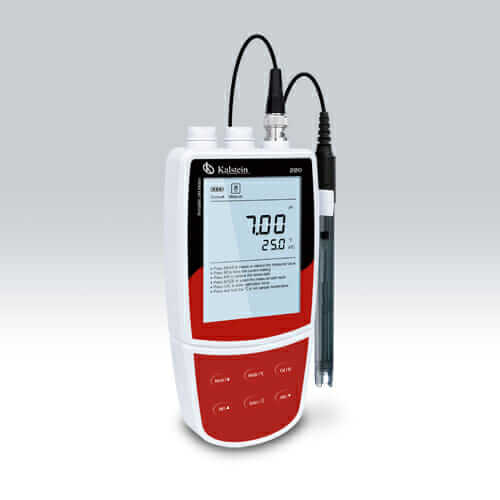
How to Optimize Return on Investment with Table pH Meters in Laboratories
In laboratory environments, making informed decisions based on a thorough understanding of the costs and benefits associated with equipment such as table pH meters is critical for optimizing return on investment (ROI). This article will explore the various models of table pH meters, their applications, and how they contribute towards achieving cost-effective operations while maintaining high standards of performance.
Understanding the Importance of Return on Investment in Laboratory Settings
Return on investment (ROI) is a key performance indicator that evaluates the efficiency of an investment. In laboratory settings, especially when utilizing table pH meters, understanding ROI involves assessing the initial costs of the equipment, ongoing operational expenses, and the potential savings generated by increased efficiency, accuracy, and reliability. By carefully analyzing these factors, laboratories can optimize their investments in pH measurement technologies for better financial performance and resource management.
Common Cost-Benefit Analysis Metrics for Table pH Meters
When analyzing the cost-effectiveness of table pH meters, several metrics are essential, including:
- Capital Expenditure (CAPEX): The initial purchase price of the equipment.
- Operational Expenditure (OPEX): The ongoing costs associated with maintenance, calibration, and consumables.
- Payback Period: The estimated time required for the investment to pay for itself through savings.
- Cost per Test: The average cost incurred in performing a single measurement.
Utilizing these metrics allows laboratories to compare different models and make data-driven decisions regarding their investments.
Comparison of Available Models
| Model | CAPEX (USD) | Cost per Test (USD) | Payback (Months) | Best for |
|---|---|---|---|---|
| YR0220A | 155.00 | 0.50 | 6 | Routine laboratory use with versatility |
| YR01822 | 215.00 | 0.60 | 8 | Advanced features for research labs |
| YR01825 | 335.00 | 0.70 | 10 | High-throughput environments |
| YR01823-2 | 315.00 | 0.65 | 9 | Precision measurements for quality control |
| YR01823 | 285.00 | 0.55 | 7 | User-friendly operations and diagnostics |
| YR01826 | 199.00 | 0.52 | 7 | Cost-effective solution for educational labs |
Evaluating the Cost-Effectiveness of Each Model
To determine which table pH meter offers the best ROI, it is essential to evaluate each model's strengths concerning your specific laboratory requirements. For instance, the YR0220A is ideal for routine measurements due to its affordable price and reliable performance. In contrast, the YR01825 stands out in high-throughput labs, despite its higher initial cost, as it enhances productivity and reduces overall long-term expenses.
Mitigating Operational Costs with Efficient Calibration and Maintenance
Regular calibration and maintenance are critical in ensuring the longevity and accuracy of table pH meters. By adhering to a strict calibration schedule, laboratories can prevent costly errors and minimize downtime. For instance, implementing a biannual calibration protocol can reduce operational costs significantly by ensuring that equipment remains within specified accuracy limits, ultimately leading to better data quality and resource utilization.
Common Mistakes and How to Avoid Them
Laboratories often encounter several pitfalls when selecting and using table pH meters. Common mistakes include:
- Overlooking the total cost of ownership: Focusing solely on the initial purchase price can lead to higher overall expenses.
- Neglecting calibration schedules: Infrequent calibration can result in inaccurate measurements and costly errors.
- Not training staff adequately: Ensuring that all users are proficient in operating the equipment helps maintain consistency and reduces misuse.
To avoid these mistakes, laboratories should adopt a comprehensive evaluation process before purchasing equipment and implement regular training programs.
Maximizing Efficiency through Technological Integration
Integrating table pH meters with laboratory management systems can yield significant efficiency gains. Connectivity options, such as USB output and wireless data transfer, enable seamless data sharing and record-keeping. For instance, the YR01822's wireless capability allows real-time data transfer, enhancing data accuracy and minimizing the risk of human error.
Frequently Asked Questions
How can I assess the ROI of a table pH meter for my laboratory?
To assess ROI, consider factors such as initial costs, annual maintenance expenses, and the accuracy of results. For example, the YR0220A offers a low initial cost of $155.00, which can be recouped through efficient laboratory operations, potentially achieving a payback period of just 6 months.
What are the key features to look for in a table pH meter to ensure cost-effectiveness?
Key features include automatic calibration, temperature compensation, and data connectivity. Models like the YR01825 excel in these areas, providing advanced features that enhance cost-effectiveness in lab operations.
Which table pH meter model is best for high-throughput laboratories in 2026?
The YR01825 model is optimized for high-throughput laboratories, allowing for efficient data processing and measurement, making it suitable for busy settings.
How often should I calibrate my table pH meter to maintain accuracy?
Calibration frequency typically depends on usage, but a biannual schedule is recommended for accurate readings. The YR01822 provides automatic calibration features that facilitate this process.
What are the expected operational costs for using table pH meters?
Operational costs include maintenance and consumables, averaging around $0.50 per test with models like the YR0220A. Regular maintenance can help minimize these costs over time.
How do I integrate a table pH meter with laboratory management systems?
Integration can be achieved through USB or Bluetooth connectivity, as seen in the YR01822 model. This allows for real-time data transfer, improving overall laboratory efficiency.
Which model is best suited for educational laboratory settings?
The YR01826 is a cost-effective choice for educational laboratories, providing reliable performance and ease of use without incurring high costs.
What long-term savings can I expect from investing in a high-quality pH meter?
Investing in a high-quality pH meter like the YR01825 can yield substantial long-term savings through increased accuracy, reduced error rates, and lower operational costs, ultimately leading to improved laboratory efficiency.
If you are looking for a fusion of innovation and quality, you have come to the right place. At Kalstein, we offer you the luxury of exploring our exclusive catalog of laboratory equipment. We manufacture every device to the highest standards of excellence. Our intuitive and seamless online purchasing channels are designed for your convenience, securing the most competitive prices. Hesitate no longer — we bring science to life, it is time to become part of our community.