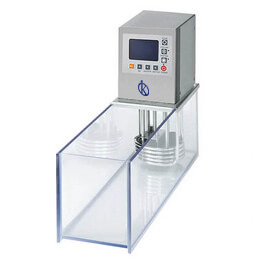
Transparent Water Baths: ROI and Cost-Benefit Analysis for Labs 2026
As laboratories seek to optimize their operations and equipment investments, understanding the return on investment (ROI) and cost-benefit analysis of transparent water baths becomes crucial. This article delves deep into the various models available, exploring their specifications, applications, and the financial implications of choosing one over another for laboratory work in 2026.
Understanding Transparent Water Baths in the Context of ROI
Transparent water baths are pivotal in various laboratory applications, including tissue culture, enzymatic reactions, and growth studies. With advancements in technology, these baths not only improve temperature uniformity and precision but also enhance laboratory productivity.
When considering ROI for these instruments, it's essential to evaluate factors such as initial capital expenditure (CAPEX), operational costs (OPEX), and the impact on overall laboratory efficiency. Below, we analyze the financial metrics associated with different models of transparent water baths.
Comparison of Available Models
| Model | CAPEX (USD) | Cost per Test | Payback Period (Months) | Recommended Scenario |
|---|---|---|---|---|
| YR05080 | 293.00 | 2.93 | 3 | Small labs focused on precise temperature control. |
| YR05081 | 403.00 | 4.03 | 4 | Medium-sized labs for varied applications. |
| YR05082 | 513.00 | 5.13 | 5 | Large labs with high throughput needs. |
Cost Breakdown: CAPEX vs OPEX
To fully understand the ROI of transparent water baths, laboratories must consider both CAPEX and OPEX. CAPEX refers to the initial purchase price, while OPEX includes maintenance, energy consumption, and operational costs throughout the equipment's lifespan.
For example, the YR05080 model with a CAPEX of $293.00 has an estimated operational cost of $40 per month, bringing the total to approximately $1,293 over three years. In contrast, the YR05082 model, priced at $513.00, may have a higher initial investment but offers enhanced features that could improve long-term efficiency.
Energy Consumption and Sustainability
Energy consumption is another critical factor in the cost-benefit analysis of transparent water baths. Knowing the kilowatt-hours (kWh) used per run helps laboratories make informed decisions regarding operational costs.
| Model | Energy Consumption (kWh/run) | Estimated Monthly Consumption (kWh) |
|---|---|---|
| YR05080 | 0.5 | 15 |
| YR05081 | 0.75 | 22.5 |
| YR05082 | 1.0 | 30 |
Opting for models with lower energy consumption, such as the YR05080, can lead to significant savings in utility costs, enhancing the overall ROI.
Common Mistakes and How to Avoid Them
When investing in transparent water baths, laboratories often make common mistakes that can impact their ROI. One common error is underestimating the importance of temperature accuracy and stability, which can lead to experimental errors and wasted resources. Selecting a model like the YR05081, known for its ±0.5°C precision, can mitigate this risk.
Another mistake is failing to evaluate the total cost of ownership, including operational and maintenance costs. Laboratories should conduct a thorough analysis of all potential expenses associated with each model to ensure they choose the most cost-effective option.
Frequently Asked Questions
What is the ROI for using a YR05081 transparent water bath in 2026?
The YR05081 transparent water bath has a CAPEX of $403 and a potential ROI based on operational advantages like precision and temperature stability. It generally provides a payback within four months if used effectively in medium-sized labs.
How does the energy consumption of a transparent water bath affect operational costs?
Energy consumption directly impacts operational costs. For instance, the YR05080 model consumes approximately 15 kWh monthly, while the YR05082 uses 30 kWh, leading to higher monthly expenses for the latter in high-usage scenarios.
Which model of transparent water baths is best for small laboratories?
The YR05080 model is ideal for small laboratories due to its lower CAPEX of $293 and efficient energy consumption, making it a cost-effective solution for precise temperature control in various applications.
What maintenance costs should be expected for the YR05082 model?
For the YR05082 model, maintenance costs are typically around $50 annually, depending on usage. This model's higher initial cost is offset by its durable design and enhanced features, which can reduce long-term expenses.
How can labs maximize ROI when purchasing a transparent water bath?
Laboratories can maximize ROI by selecting models that offer the best balance between initial cost and operational efficiency. Regular maintenance and energy usage monitoring, especially for models like the YR05081, can also minimize unexpected costs.
What are the main applications for the YR05081 transparent water bath?
The YR05081 is primarily designed for tissue culture and enzymatic reactions, where precise temperature stability is crucial for reproducible results, making it a preferred choice for many labs.
Why is temperature precision important in laboratory settings?
Temperature precision is essential in labs as it ensures consistent experimental conditions, reducing variations that could lead to erroneous results. Models like the YR05081, with ±0.5°C accuracy, are ideal for achieving reliable outcomes.
What factors should labs consider when selecting a transparent water bath model?
Labs should consider initial cost, energy consumption, precision, and specific applications when selecting a transparent water bath. Each model, such as the YR05082, offers distinct advantages that can significantly impact lab efficiency.
If you are looking for a fusion of innovation and quality, you have come to the right place. At Kalstein, we offer you the luxury of exploring our exclusive catalog of laboratory equipment. We manufacture every device to the highest standards of excellence. Our intuitive and seamless online purchasing channels are designed for your convenience, securing the most competitive prices. Hesitate no longer — we bring science to life, it is time to become part of our community.