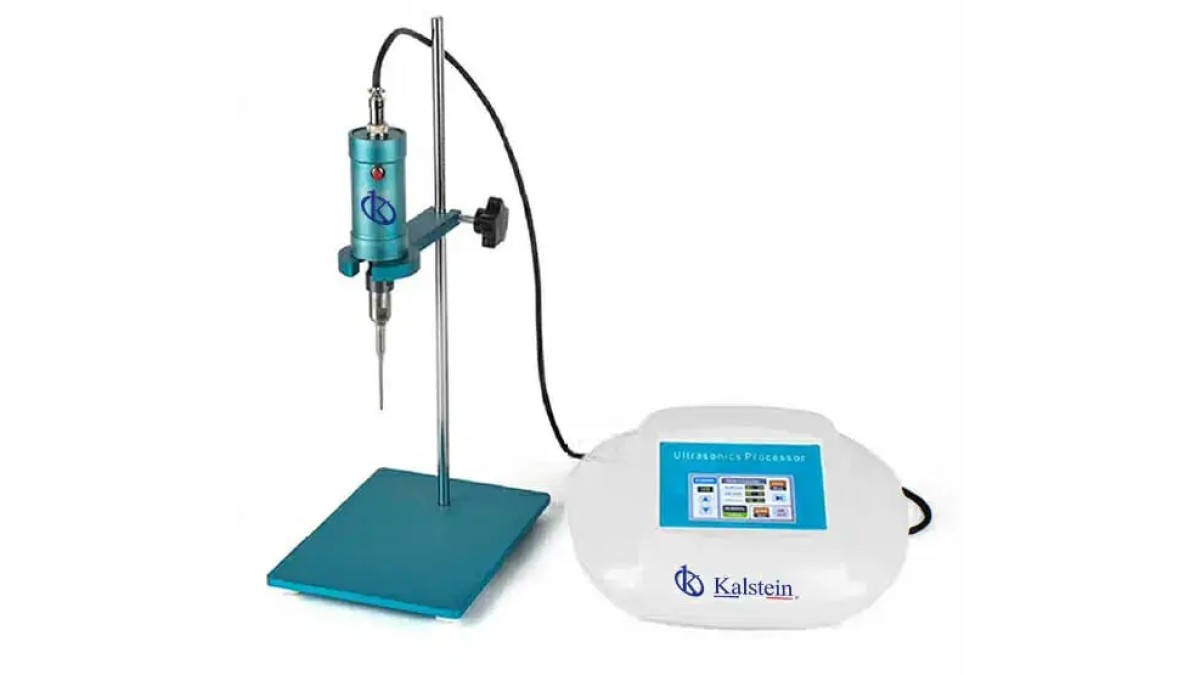
Ultrasonic Homogenizers: Applications and Techniques in 2026
What is it used for in 2026
Ultrasonic homogenizers have become essential tools in laboratories across various sectors in 2026, providing efficient solutions for sample preparation and processing. These devices utilize high-frequency ultrasonic waves to create cavitation bubbles in liquids, leading to intense mixing and disruption of particles and cells. Common applications include:
- Cell Disruption: Effective for breaking down both plant and animal cells, facilitating the extraction of proteins, DNA, and other cellular components.
- Emulsification: Useful for creating stable emulsions in pharmaceuticals and food products.
- Homogenization: Ensures uniform particle sizes in suspensions, crucial for achieving consistent results in formulations.
- Extraction: Enhances the yield of bioactive compounds from natural sources, beneficial in research and industrial applications.
- Defoaming: Reduces the formation of foam in various processes.
History and evolution of the technology
The history of ultrasonic technology dates back to the early 20th century when it was first utilized for cleaning and welding applications. Over the decades, advancements in ultrasonic equipment and biochemistry led to its adoption in laboratories for various applications. In the late 1970s, ultrasonic homogenizers began to emerge in research settings, providing a novel approach to sample processing. Since then, improvements in digital controls, power output, and efficiency have transformed these devices into sophisticated tools, widely used in biotechnology, pharmaceuticals, and academic research.
How to use it step by step
Using an ultrasonic homogenizer involves several key steps to ensure optimal performance:
- Preparation: Gather all necessary materials, including the sample, ultrasonic homogenizer, and appropriate probe.
- Setup: Connect the ultrasonic probe to the homogenizer, ensuring it is secure.
- Calibration: Set the desired parameters, including amplitude, power, and duration based on the sample's needs.
- Processing: Place the probe into the sample and initiate the homogenization. Monitor the process to avoid overheating.
- Post-processing: Once completed, carefully remove the probe and analyze the sample as required.
Best techniques and protocols
To maximize the efficacy of ultrasonic homogenizers, consider these best practices:
- Optimize Amplitude: Adjust the amplitude according to the sample type; higher amplitudes may be necessary for tougher cells.
- Maintain Temperature: Use a cooling system or periodically check the temperature to prevent heat damage.
- Time Management: Monitor processing time to avoid over-processing, which may alter sample integrity.
- Use Appropriate Probes: Select probes based on the sample volume and desired results to enhance efficiency.
- Repeatability: For reproducible results, maintain consistent parameters across experiments.
Practical applications by laboratory type
Different laboratory types utilize ultrasonic homogenizers in unique ways:
Biotechnology Labs
In biotechnology labs, ultrasonic homogenizers are crucial for cell disruption and extraction of biomolecules, facilitating research in genetic studies and protein engineering.
Pharmaceutical Labs
Pharmaceutical applications focus on emulsification and homogenization of formulations, ensuring drug delivery systems are effective and stable.
Academic Research Labs
Academic institutions employ these devices for a variety of experimental setups, including studies in microbiology, molecular biology, and environmental science.
Regulations, standards and certifications
Laboratories using ultrasonic homogenizers must adhere to several regulations and standards to ensure safety and quality:
- ISO Standards: Laboratories should comply with ISO 9001 for quality management systems and ISO 17025 for laboratory competence.
- Good Laboratory Practice (GLP): Following GLP guidelines ensures the reliability and reproducibility of experimental results.
- Environmental Regulations: Ensure that waste and emissions from processes meet local environmental regulations.
Comparison with alternative technologies
When considering ultrasonic homogenizers, it is beneficial to compare them with alternative technologies:
- Mechanical Homogenizers: Typically provide lower efficiency and may require more time for sample processing than ultrasonic homogenizers.
- Cryogenic Grinding: Effective for certain applications, but requires specialized equipment and has limitations with moisture-sensitive samples.
- High-Pressure Homogenization: Offers similar benefits but can be more costly and complex to operate compared to ultrasonic methods.
Comparison of available models
| Model | Best for | Key specs | Recommended use case |
|---|---|---|---|
| YR05829 | Cell disruption, emulsification | Power: 5-150W, Frequency: 19-25KHz | Small sample sizes, basic homogenization tasks |
| YR05830 | Cell disruption, emulsification | Power: 5-250W, Frequency: 19-25KHz | Medium sample sizes, versatile processing |
| YR05831 | Cell disruption, emulsification | Power: 5-400W, Frequency: 19-25KHz | Large sample sizes, advanced applications |
| YR05831-op1 | Cell disruption, extraction | Power: 5-400W, Frequency: 19-25KHz | Small sample sizes with extended capabilities |
| YR05831-op2 | Cell disruption, extraction | Power: 5-400W, Frequency: 19-25KHz | Affordability for researchers |
| YR05832 | Cell disruption, emulsification | Power: 650W, Frequency: 20-25KHz | High-capacity applications in production environments |
Common mistakes and how to avoid them
To ensure effective use of ultrasonic homogenizers, be aware of common mistakes:
- Inadequate Calibration: Always calibrate the device according to the manufacturer’s specifications.
- Ignoring Temperature Control: Regularly monitor temperature to avoid damaging sensitive samples.
- Overprocessing Samples: Standardize processing times to prevent degradation of samples.
Maintenance, calibration and good practices 2026
Regular maintenance and calibration are crucial for optimal performance:
- Regular Cleaning: Clean the probes and containers after each use to prevent cross-contamination.
- Calibrate Periodically: Conduct routine calibrations to maintain accuracy in processing.
- Inspect Components: Regularly check all components for wear and replace as necessary to ensure longevity.
Cost-benefit analysis 2026
Investing in ultrasonic homogenizers can yield significant benefits:
- Efficiency: Reduced processing times lead to increased output and productivity.
- Quality: Enhanced sample quality and reproducibility can improve research outcomes.
- Versatility: Ability to perform multiple techniques makes them a valuable asset in any laboratory.
Frequently asked questions
What is the best ultrasonic homogenizer for small sample sizes?
The YR05829 model is ideal for small sample sizes due to its lower power requirements and efficiency in basic homogenization tasks.
How do I maintain my ultrasonic homogenizer?
Regular maintenance includes cleaning the probes after each use, calibrating the device periodically, and inspecting components for wear.
Can ultrasonic homogenizers be used for DNA extraction?
Yes, ultrasonic homogenizers are excellent for disrupting cell walls and facilitating the extraction of DNA and other biomolecules.
What safety precautions should I take while using ultrasonic homogenizers?
Always wear appropriate personal protective equipment (PPE) and avoid direct contact with the probe during operation.
Are ultrasonic homogenizers suitable for emulsification?
Absolutely! Ultrasonic homogenizers are widely used for creating stable emulsions, particularly in the pharmaceutical and food industries.
How do I choose the right model for my lab?
Consider the sample sizes, types of materials, and specific applications to determine which model best suits your laboratory needs.
Where can I request a quote for ultrasonic homogenizers?
You can request a quote through our dedicated online services, ensuring you find the best equipment for your laboratory.
If you are looking for a fusion of innovation and quality, you have come to the right place. At Kalstein, we offer you the luxury of exploring our exclusive catalog of laboratory equipment. We manufacture every device to the highest standards of excellence. Our intuitive and seamless online purchasing channels are designed for your convenience, securing the most competitive prices. Hesitate no longer — we bring science to life, it is time to become part of our community.