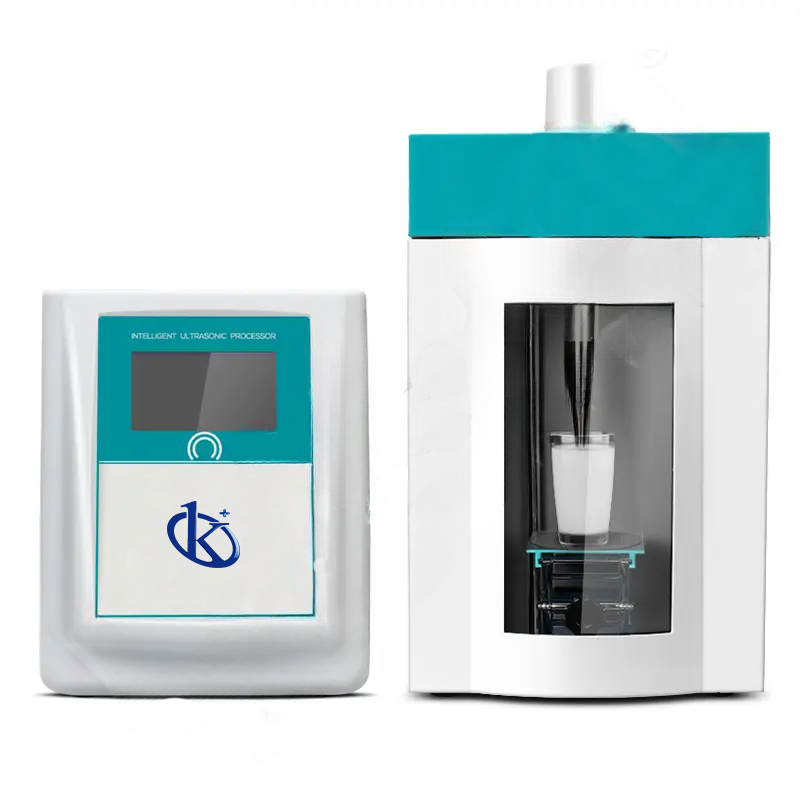
Ultrasonic Homogenizers: Practical Applications and Techniques 2026
In modern laboratories, ultrasonic homogenizers have become indispensable tools for effectively processing samples. They utilize ultrasonic waves to achieve high levels of mixing, dispersing, and emulsifying, making them suitable for a wide range of applications across various fields. This article delves into the practical usage of ultrasonic homogenizers in 2026, covering their applications, techniques, and best practices.
What is it used for in 2026
Ultrasonic homogenizers are primarily used in laboratories to enhance sample preparation through processes such as emulsification, cell disruption, and homogenization. They are utilized in various fields including biotechnology, pharmaceuticals, food processing, and chemical analysis. In 2026, their applications extend beyond mixing to include methods for extracting valuable compounds from biological samples, preparing nanoparticles, and even aiding in the formulation of vaccines. Their precision and efficiency make them ideal for applications requiring consistent results and reproducibility.
History and evolution of the technology
The concept of ultrasonic homogenization dates back to the early 20th century when researchers began exploring the effects of ultrasonic waves on liquids. Initially, ultrasonic technology was utilized primarily in industrial applications. Over the decades, advancements in technology have led to the miniaturization and enhancement of ultrasonic devices, making them more accessible for laboratory use. By the 2010s, ultrasonic homogenizers became popular in research settings, with features such as programmable settings, digital displays, and enhanced safety mechanisms. This evolution has culminated in the sophisticated models available today, including those discussed in this article.
How to use it step by step
Using an ultrasonic homogenizer involves a systematic approach to ensure optimal results. Follow these steps for effective operation:
- Preparation: Gather all materials needed for the homogenization process, including samples, solvents, and the ultrasonic homogenizer.
- Calibration: Ensure the device is calibrated as per manufacturer instructions. This might include settings for power, frequency, and time.
- Sample Placement: Place your sample in an appropriate container. Ensure that the ultrasonic probe is fully submerged in the liquid for effective energy transfer.
- Setting Parameters: Input the desired parameters such as power level, duration of ultrasonic treatment, and any specific cycles if required.
- Start the Process: Begin the homogenization process. Monitor the sample closely during operation to check for any changes in consistency.
- Post-Treatment Analysis: After completion, analyze your sample to ensure it meets the expected outcomes of the homogenization process.
Best techniques and protocols
When operating ultrasonic homogenizers, the following techniques and protocols can enhance performance:
- Temperature Control: Monitor the sample temperature during operation, as excessive heat can affect sample integrity. Use cold water baths if needed.
- Pulse Mode Operation: Utilize pulse mode to allow samples to rest between ultrasonic bursts, reducing heat buildup and ensuring uniform processing.
- Probe Selection: Choose the right probe size based on the sample volume and viscosity for optimal energy transfer.
- Consistent Sample Volume: Maintain a consistent sample volume across experiments for reproducible results.
- Regular Maintenance: Clean the probes and devices after use to prevent contamination and maintain performance.
Practical applications by laboratory type
Ultrasonic homogenizers find extensive applications across various laboratory types:
Biotechnology Laboratories
In biotechnology, these devices are used for cell disruption, extracting DNA or proteins from cells, and preparing liposomes.
Pharmaceutical Laboratories
Pharmaceutical labs utilize ultrasonic homogenizers for drug formulation, emulsifying active ingredients, and ensuring uniform consistency.
Food Laboratories
In food science, they aid in the emulsification of sauces, creams, and dressings, as well as in the extraction of flavors and nutrients.
Chemical Analysis Laboratories
Researchers in chemical analysis leverage ultrasonic homogenizers for mixing reagents and preparing samples for spectroscopic analysis.
Regulations, standards and certifications
Ultrasonic homogenizers must comply with various industry standards and regulations to ensure safety and efficacy. In 2026, laboratories should adhere to regulations such as ISO 9001 for quality management and ISO 13485 for medical device manufacturing when utilizing homogenizers for pharmaceutical applications. Additionally, devices may need to comply with local safety standards to ensure operator safety.
Comparison with alternative technologies
While ultrasonic homogenizers are highly effective, alternative technologies such as high-shear mixers and bead mills are also employed in laboratories. High-shear mixers provide efficient blending capabilities but may lack the precision of ultrasonic devices. Bead mills offer good particle size reduction but can be less effective for delicate samples. Ultrasonic homogenizers stand out due to their ability to process small volumes with minimal sample loss and their effectiveness in preserving sensitive biological materials.
Comparison of available models
| Model | Best for | Key specs | Recommended use case |
|---|---|---|---|
| YR05015 | Small sample homogenization | 150W, 0.1-150 ml | Ideal for laboratory-scale experiments requiring precision. |
| YR05016 | Medium sample processing | 250W, 0.1-300 ml | Suitable for preparing emulsions and dispersions. |
| YR05017 | Large sample homogenization | 650W, 0.1-500 ml | Best for applications in biopharma involving larger volumes. |
| YR05018 | High viscosity samples | 900W, 0.1-600 ml | Effective for challenging formulations requiring higher energy. |
| YR05019 | High-volume processing | 1200W, 1-1000 ml | Ideal for high-throughput applications in industrial settings. |
| YR05020 | Research and development | 1800W, 1-1200 ml | Perfect for cutting-edge applications in research labs. |
Common mistakes and how to avoid them
While operating ultrasonic homogenizers, common mistakes may arise, leading to suboptimal results. To avoid these pitfalls:
- Using the Wrong Probe: Ensure the probe size is suitable for your sample volume to optimize energy transfer.
- Neglecting Temperature Monitoring: Always monitor temperature to prevent heat damage to the sample.
- Overloading the Device: Do not exceed the recommended sample capacity to avoid damage and ensure effective homogenization.
- Skipping Calibration: Regularly calibrate your device to maintain accuracy and reproducibility.
Maintenance, calibration and good practices 2026
Keeping ultrasonic homogenizers in peak condition requires regular maintenance and calibration. Follow these guidelines:
- Regular Cleaning: Clean probes and containers thoroughly after each use to prevent contamination.
- Calibration: Calibrate the device at regular intervals according to manufacturer guidelines.
- Visual Inspection: Check for any wear or damage on probes and replace as necessary.
- Document Results: Maintain records of usage and maintenance to ensure compliance and performance tracking.
Cost-benefit analysis 2026
When investing in ultrasonic homogenizers, consider the cost versus the benefits they provide. While upfront costs may be substantial, the time efficiency, enhanced sample quality, and increased throughput often justify the investment. In 2026, labs can expect to save costs related to re-running experiments due to inconsistent results, ultimately leading to improved productivity and efficiency.
Frequently asked questions
What is the best ultrasonic homogenizer for small volume samples?
The YR05015 model is ideal for small volume homogenization, with a power output of 150W suitable for sample sizes from 0.1 to 150 ml.
How can I ensure the temperature remains controlled during ultrasonic homogenization?
Monitor the sample temperature throughout the process and consider using a cooling bath if heating is excessive.
What common mistakes should I avoid when using an ultrasonic homogenizer?
Avoid using the wrong probe size, neglecting temperature control, overloading the device, and skipping calibration.
How often should I calibrate my ultrasonic homogenizer?
Calibration should be performed at regular intervals as recommended by the manufacturer to maintain accuracy.
Can ultrasonic homogenizers be used for high viscosity samples?
Yes, models like the YR05018 are specifically designed for high viscosity samples and can provide effective homogenization.
What documentation should I maintain for my ultrasonic homogenizer?
Maintain records of usage, maintenance, and calibration to ensure compliance and performance tracking.
How does ultrasonic homogenization compare to bead mill methods?
Ultrasonic homogenizers excel in precision and preserving sensitive biological materials compared to bead mills, which may be less effective for delicate samples.
If you are looking for a fusion of innovation and quality, you have come to the right place. At Kalstein, we offer you the luxury of exploring our exclusive catalog of laboratory equipment. We manufacture every device to the highest standards of excellence. Our intuitive and seamless online purchasing channels are designed for your convenience, securing the most competitive prices. Hesitate no longer — we bring science to life, it is time to become part of our community.