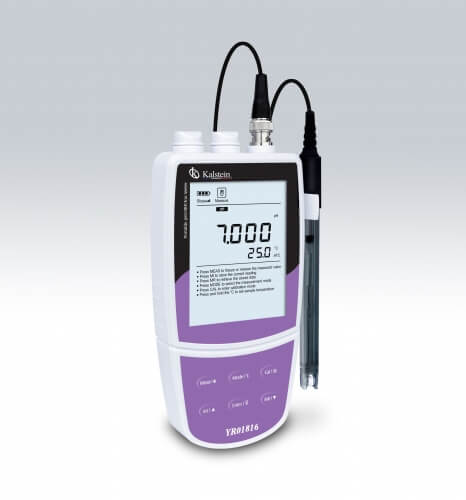
Understanding the Scientific Principles Behind the YR01817-3 Portable Ammonium Ion Meter
The YR01817-3 Portable Ammonium Ion Meter is engineered for precision measurement in various laboratory and field applications. This article delves into the underlying scientific principles that power this remarkable device, enhancing your understanding of its functionalities and applications.
Principles of Operation
The YR01817-3 employs ion-selective electrode (ISE) technology to measure ammonium ion concentration in various solutions. The device is designed to respond selectively to ammonium ions while minimizing interference from other ions, making it a reliable instrument in both laboratory and field environments.
The fundamental principle of operation is based on the Nernst equation, which relates the potential difference (voltage) across the ion-selective electrode to the logarithm of the ion activity in the solution. The equation can be expressed as follows:
E = E0 + (RT/nF) * ln(aion)
Where:
- E = measured potential
- E0 = standard electrode potential
- R = universal gas constant
- T = temperature in Kelvin
- n = charge number of the ion
- F = Faraday's constant
- aion = activity of the ion
This equation provides a theoretical framework for understanding how the YR01817-3 calculates the concentration of ammonium ions based on the measured voltage.
Calibration and Accuracy of the YR01817-3
Calibration is pivotal in ensuring the accuracy of the YR01817-3 Portable Ammonium Ion Meter. The device allows for a flexible calibration procedure, featuring a 2 to 5-point calibration that can adjust to varying ion concentrations. Users can select from eight standard calibration solutions ranging from 0.001 to 10,000 ppm.
To maintain precision, the device must be calibrated regularly, especially before critical measurements. The calibration process involves immersing the electrode in the calibration solutions, allowing the meter to record the corresponding voltage readings, thereby establishing a baseline for accurate measurements.
The accuracy of the YR01817-3 is rated at ± 0.5% FS, ensuring reliable results across its operational range of 5 × 10⁻⁶ to 1 M (0.1 to 18,000 ppm). This level of precision is crucial for applications requiring stringent measurement standards.
Key Features and Functionalities
| Feature | Description |
|---|---|
| Backlit LCD Display | Provides clear readings in various lighting conditions. |
| Automatic Temperature Compensation | Ensures accuracy of readings across different temperatures. |
| Memory Storage | Stores up to 500 sets of data for future reference. |
| USB Communication Interface | Facilitates data transfer for analysis and reporting. |
Understanding Ion Concentration Measurements
The YR01817-3 Portable Ammonium Ion Meter provides readings in various units, including ppm, mg/L, and mol/L. It is crucial for users to understand these units to interpret the results accurately:
- PPM (Parts Per Million): A common unit in environmental analysis, indicating the concentration of ammonium ions in millions of parts.
- MG/L (Milligrams per Liter): Equivalent to ppm; often used in laboratory settings.
- MOLE/L (Molarity): A measure of the concentration of a solute in a solution, defined as moles of solute per liter of solution.
Interpreting readings from the YR01817-3 also requires an understanding of acceptable ranges in various applications. For example, environmental monitoring may set different standards than clinical settings, making familiarity with these norms essential for accurate assessments.
Site Requirements for Optimal Performance
For optimal performance of the YR01817-3, specific environmental conditions must be maintained. These include:
- Temperature Range: 0 to 105 °C (32 to 221 °F)
- Humidity: Should be maintained within recommended limits to prevent electrode degradation.
- Power Supply: The device operates on 3 AA batteries or a DC5V power adapter.
- Vibration and EMI: Minimize exposure to vibrations and electromagnetic interference that could affect readings.
Setting up a dedicated area that meets these requirements will ensure the longevity and accuracy of the YR01817-3.
Frequently Asked Questions
What is the operational principle of the YR01817-3 Portable Ammonium Ion Meter?
The YR01817-3 uses ion-selective electrode technology to measure the concentration of ammonium ions based on the Nernst equation, which relates voltage to ion activity.
How do I calibrate the YR01817-3 Portable Ammonium Ion Meter?
Calibration involves using 2 to 5 different standard solutions that span the range of expected ion concentrations, ensuring accurate measurement across various conditions.
What are the acceptable ranges for readings taken with the YR01817-3?
The device can measure ammonium ion concentrations from 5 × 10⁻⁶ to 1 M (0.1 to 18,000 ppm), with an accuracy of ± 0.5% FS.
What are the environmental conditions required for optimal use of the YR01817-3?
Optimal conditions include a temperature range of 0 to 105 °C, controlled humidity, and minimal exposure to vibrations and electromagnetic interference.
How can I ensure long-term reliability of the YR01817-3?
Regular calibration, proper storage, and adherence to recommended operational conditions will help maintain the reliability and longevity of the device.
Can the YR01817-3 be used outdoors?
Yes, the YR01817-3 is designed for outdoor applications, provided that it is protected from extreme environmental conditions that could affect its performance.
How do I interpret the results displayed by the YR01817-3?
Understanding the units of measurement (ppm, mg/L, mol/L) and familiarizing yourself with acceptable limits for your specific application will aid in accurately interpreting results.
If you are looking for a fusion of innovation and quality, you have come to the right place. At Kalstein, we offer you the luxury of exploring our exclusive catalog of laboratory equipment. We manufacture every device to the highest standards of excellence. Our intuitive and seamless online purchasing channels are designed for your convenience, securing the most competitive prices. Hesitate no longer — we bring science to life, it is time to become part of our community.