Optical Surgical Navigation
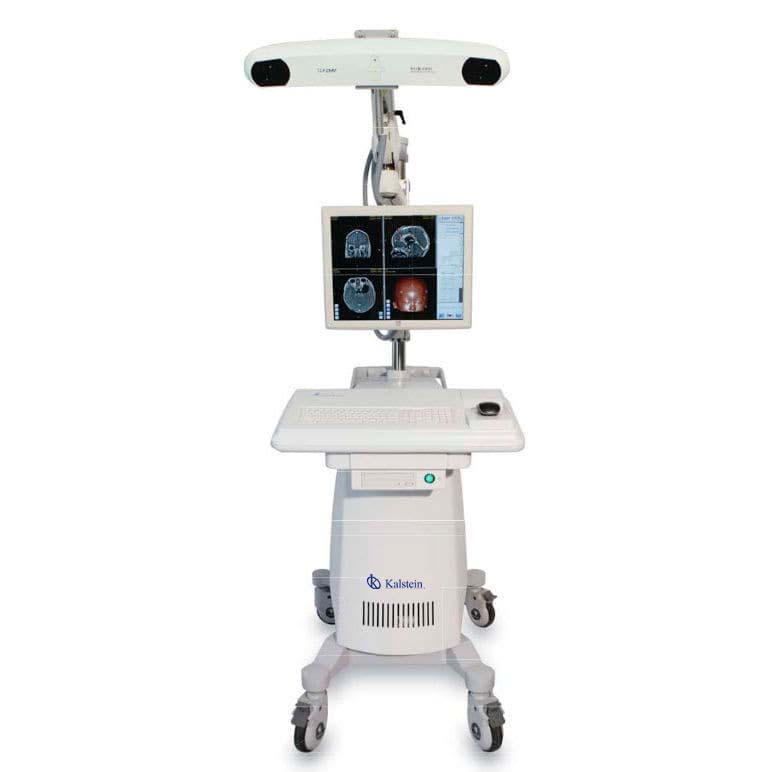
Optical surgical navigation is revolutionizing surgical procedures by offering enhanced precision and accuracy. These advanced systems utilize electromagnetic technology to provide real-time feedback and visualization, aiding surgeons in complex operations. The integration of such technology can significantly improve patient outcomes and reduce recovery times.
When considering an investment in optical surgical navigation systems, understanding the features, capabilities, and market dynamics is crucial. This guide will equip you with the necessary insights to make an informed decision that aligns with your laboratory's requirements and budget.
What you should know before selecting a optical surgical navigation and making an investment
Key factors to consider
When selecting an optical surgical navigation system, consider its compatibility with existing surgical instruments and the specific needs of your procedures. Evaluate the user interface for ease of use and the level of training required for staff. Additionally, look for systems that offer robust support and maintenance services to ensure long-term functionality.
Assess the precision and accuracy of the navigation technology, as these factors directly impact surgical outcomes. Systems that provide real-time imaging and navigation can greatly enhance a surgeon's ability to make informed decisions during operations.
Market price range
The market for optical surgical navigation systems varies significantly, with prices influenced by features, technology, and brand reputation. Basic systems may start in the lower range, while advanced models equipped with cutting-edge technology can reach higher price points. It's essential to analyze what features justify the cost.
Keep in mind that while initial investment is important, consider the long-term benefits of enhanced surgical outcomes and reduced complications, which can offset higher upfront costs. Researching multiple vendors will provide a clearer picture of the market landscape.
Value for money
Determining the value for money of an optical surgical navigation system involves evaluating both its acquisition cost and the potential benefits it brings to surgical procedures. Systems that enhance accuracy and efficiency can lead to shorter operation times and lower complication rates, translating to cost savings in the long run.
Consider the system's reliability and the extent of its features, as these elements contribute to its overall value. Investing in a system that meets your surgical needs will ultimately provide the best return on investment.
Expected lifespan based on use and maintenance
The expected lifespan of an optical surgical navigation system can vary widely depending on its usage and maintenance practices. Regular service and adherence to manufacturer guidelines can extend the life of these systems significantly, ensuring consistent performance over time.
Consider the warranty and support options offered by manufacturers, as these can provide additional peace of mind regarding the longevity of your investment. A well-maintained system is more likely to deliver reliable results throughout its operational life.
OPTICAL SURGICAL NAVIGATION KALSTEIN
Discover optical surgical navigation for your laboratory
Explore the innovative Surgical Navigation Systems YR02143, designed to enhance surgical visualization and improve operational efficacy. This state-of-the-art system combines advanced technology with user-friendly design, making it an essential tool for modern surgical environments.
Surgical Navigation Systems YR02143
The Surgical Navigation Systems YR02143 is a state-of-the-art computer-aided electromagnetic navigation system designed to enhance surgical visualizat
View productOur best-selling optical surgical navigation
Surgical Navigation Systems YR02143
Market Price
The cost of surgical navigation systems like the YR02143 varies significantly, typically ranging between $100,000 and $300,000 depending on the features and functionalities. It's crucial to consider the value this system adds to surgical precision and safety when evaluating its price. For a detailed quotation, you can generate an instant quote using the Kalstein Plus platform.Frequently Asked Questions
Q: Is the YR02143 suitable for minimally invasive surgeries? A: Yes, the YR02143 system is particularly adept at handling minimally invasive surgeries, making it ideal for procedures involving deep intracranial lesions and low-volume lesions. Q: Can the system handle unexpected power outages? A: Absolutely, the YR02143 system automatically saves patient image data and registration information, allowing for seamless continuation of the surgical process in case of power interruptions.Advantages and Disadvantages
The YR02143 system offers numerous advantages, including high precision, reduced surgical trauma, and automatic data saving. However, its complexity may require thorough training for optimal use. While its advanced features are beneficial, the initial investment can be high, justifying its cost with the long-term benefits of enhanced surgical outcomes.Product Use in the Field
The YR02143 system is actively used in various surgical settings, particularly for ENT and neurological procedures. Its ability to adapt to unexpected anatomical changes during surgery ensures that it remains a reliable tool for surgeons aiming for precision and safety.Recommendations
For optimal use, it’s recommended to undergo comprehensive training on the YR02143 system. Regular software updates and maintenance checks are also advised to ensure continuous peak performance. Users should consult the Kalstein Plus platform for any additional support and to request customized configurations.Features
- High precision with 1.0mm spatial resolution. - Compatible with DICOM images: CT, C-arm, MRI, fMRI. - Intelligent software for real-time adaptation. - Four navigation modes for comprehensive process monitoring.Technical Specifications
| Model | YR02143 | ||
| Component | Amount | Description | |
| Optical tracking system | |||
| NDI tracking system | 1 set | Track 3D position and orientation of active or passive markers attached to surgical tools | |
| Image management workstation | |||
| Computer system | 1 set | For 2D image fusion and 3D reconstruction, navigation system | |
| Touch monitor | 1 piece | 19 ", 1280 x 1024 resolution, medical and healthcare grade | |
| Software package | 1 set | Core set (image fusion, surgical planning and navigation, data management) | |
| Software version 1 | 1 piece | Diffusion-tensor-images navigation module | |
| Software version 2 | 1 piece | Needle-Aspiration-Biospy navigation module | |
| Mobile car | |||
| Support trolley with 4 wheels | 1 piece | To support the optical tracking system and image management workstation | |
| Surgical tools | |||
| Navigation probe | 2 pieces | To help the optical measurement system track movement | |
| Microscope probe | 1 piece | To help the optical measurement system track movement | |
| Active marker | 6 pieces | To help quickly recognize critical anatomical structures. | |
| Passive reflective sphere | 10 pieces | To reflect the infrared laser for cameras (in the optical tracking system) to capture | |
| Framework | 2 pieces | To locate passive reflective sphere with 4 pins | |
| Articulated arm | 1 piece | To hold the frame of reference | |
| Clamp adapter | 2 pieces | For the adaptation of another instrument (such as the brain needle during navigation) | |
| Foot-switch | 1 piece | To help register and navigate | |
| Touchmonitor specification | |||
| Case / bezel color | Beige | Mini VGA D-sub 15-pin; DVI-D | Mini VGA D-sub 15-pin; DVI-D |
| Display | Sixe: 19.0 ”diagonal, active matrix TFT | Horizontal: 31.5-80 kHz | Horizontal: 31.5-80 kHz |
| Aspect ratio: 5; 4 | Vertical: 56.3-75 Hz | Vertical: 56.3-75 Hz | |
| Useful display area | Horizontal: 14.82 "(376.32 mm) | Type: 100-240 VAC, 50-60 Hz | Type: 100-240 VAC, 50-60 Hz |
| Vertical: 11.85 "(301.06 mm) | Internal DC input power supply | Internal DC input power supply | |
| Monitor dimensions | Width: 429mm (16.9 ") | DC input voltage (line): 12V 3.6V | DC input voltage (line): 12V 3.6V |
| Height (including stand): 15.21 "(386 mm) | 48 W max. | 48 W max. | |
| Depth (inc. Base) | Operating; 0 ° C to 40 ° C | Operating; 0 ° C to 40 ° C | |
| Native resolution (optional) | 1280 x 1024 @ 60/70/75 Hz | Storage: -20 ° C to 60 ° C | Storage: -20 ° C to 60 ° C |
| Other supported resolutions | 1280 x 960 / 1,024 x 768 in Hz | Operating: 20% -80% | Operating: 20% -80% |
| Colors | 16.7 million | Storage: 10% -90% | Storage: 10% -90% |
| Brightness | LCD panel: 300 cd / m2 | Actual: 17.66 lbs. (8 kg) | Actual: 17.66 lbs. (8 kg) |
| With AccuTouch: 246 cd / m2 | Shipping: 25.10 lbs (11.84) | Shipping: 25.10 lbs (11.84) | |
| With IntellTouch: 276 cd / m2 | 3 years | 3 years | |
| Response time | 20 msec (typical) | Typical 40,000 hours at half brightness | Typical 40,000 hours at half brightness |
| Vision angle | Horizontal (left / right): 89 ° / 89 ° | MTBF; 50,000 hours demonstrated | MTBF; 50,000 hours demonstrated |
| (Typical, from the center) | Vertical (up / down): 89 ° / 89 ° | UL, Cul, fcc, ic, ce, China RoHS, Argentina S mark | UL, Cul, fcc, ic, ce, China RoHS, Argentina S mark |
| Contrast ratio | 1300: 1 (typical) | Two watt / channel speakers located in the display head | Two watt / channel speakers located in the display head |
| Input video format | Analog: (no video card needed) | OSD locks for user and power controls | OSD locks for user and power controls |
| Input sync format | Separate horizontal and vertical | OSD extras include volume, treble, bass, balance | OSD extras include volume, treble, bass, balance |
| Synchronization, compound synchronization and | OSD Language (English, Chinese, Spanish, French) | OSD Language (English, Chinese, Spanish, French) | |
| Synchronization in green | Safety lock receptacle | Safety lock receptacle | |
Detailed analysis of optical surgical navigation for an effective and safe choice
Discovering the Cutting-Edge World of Optical Surgical Navigation
Optical Surgical Navigation by Kalstein Optical Surgical Navigation systems provided by Kalstein are at the forefront of modern medical technology, enhancing precision during complex surgical procedures. These systems leverage advanced optical techniques to aid surgeons in mapping and visualizing target areas more effectively. Kalstein has built its reputation on quality and innovation, ensuring t
The Cutting-Edge World of Optical Surgical Navigation
Optical Surgical Navigation, A Deep Dive into Kalstein's Offerings In the ever-evolving field of medical technology, optical surgical navigation systems have revolutionized the way surgeons approach complex procedures. Among the many brands offering these advanced systems, Kalstein stands out for its commitment to innovation and reliability. As someone who has explored and used their products, I
Why is an optical surgical navigation system important in the O.R.?
Through technological advances in medicine, it allows health experts to reach levels of precision and safety using optical surgical navigation systems within the operating field, which are extended and assisted by computer, magnifying images, facilitating diagnosis, planning and execution of procedures.
What is the optical surgical navigation function?
Computer-assisted surgery are methods of computer technology for the realization and planning of a surgical intervention. Optical surgical navigation is considered, the passage of computer surgery as a traditional basic element resulting in touch control, stereoscopic vision, manual dexterity and complete visual control of the surgical field.
optical surgical navigation offer catalog
Guides about optical surgical navigation
Complete guides to choose optical surgical navigation
Surgical navigation systems optics and cancer
According to the functions of the optical surgical navigation, it allows the detection of cancer in patients, also decreases the arrival times to the specialist of the patient, by means of guidance to identify and overcome the barriers that
Leer más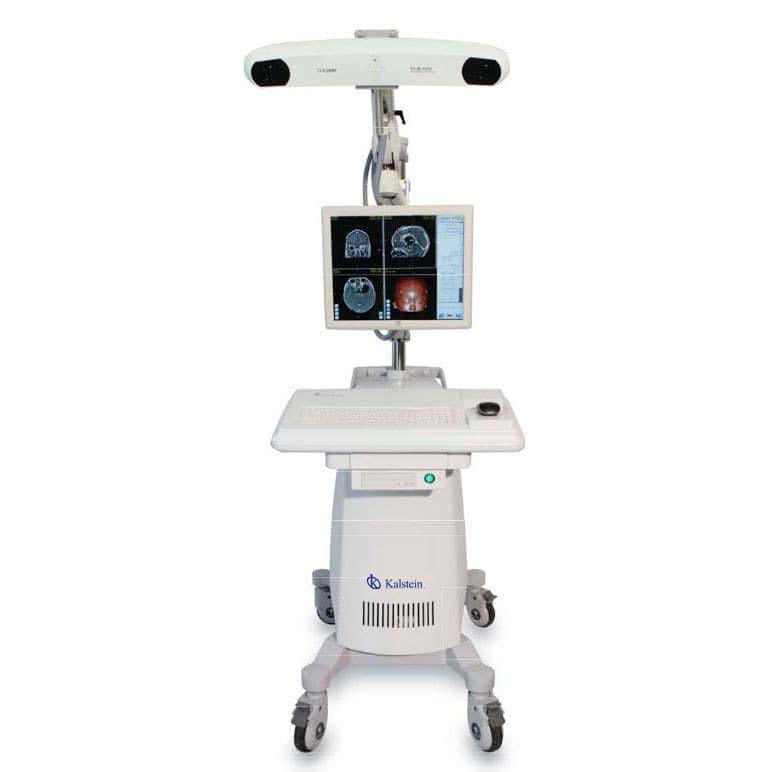
Innovation and Outlook for the Evolution of Optical Surgical Navigation: Unraveling the Advantages of Kalstein
Optical Surgical Navigation (OSN) has revolutionized medicine, dramatically changing the way surgery is performed and conceived today. This radical advancement, primarily used in brain, spinal, and orthopedic operations, allows the surgeon
Leer másWhat are the benefits of optical surgical navigation systems?
Through the use of optical surgical navigation systems, it allows the development of surgeries by means of real augmented technological simulation, which is characterized by sensory perception, adding visual content, as help guides to make
Leer másWhat is an optical surgical navigation system?
A surgical navigation system is a device that helps the planning and execution of surgical procedures in operating rooms, that is, it allows guiding surgical instruments such as the scalpel. It consists of instruments that are connected to
Leer másFrequently asked questions about Optical Surgical Navigation
How to know the prices of Optical Surgical Navigation?
To know the price of Optical Surgical Navigation, please send us an email with your request through the contact form AQUI.
What are the delivery times for Optical Surgical Navigation?
Delivery time depends on stock availability and freight type (air or sea). In stock: air 15-30 days, sea 45-60 days. Out of stock: air 30-60 days, sea 60-90 days.
How to make a purchase of Optical Surgical Navigation?
You can buy by email ([email protected]), phone (+33 (0) 1 70 39 26 50) or through the official Kalstein website in your country.
How does the warranty work for Optical Surgical Navigation?
All Kalstein equipment comes with a 1-year warranty against manufacturing defects. The warranty does not cover damage from improper installation or misuse. See our «terms and conditions» AQUI.
Can I request a quote online for Optical Surgical Navigation?
Yes, you can request a quote for the Kalstein equipment you are interested in directly from our official website. Click AQUI.