

What are the technologies used in a surgical navigation system?

A surgical navigation system is a medical team based on the principle of high-precision stereoscopic vision, and which has now become an essential team for the development of computer-assisted surgeries, as they are responsible for guiding the surgeon’s movements during surgery, showing the real-time position of each anatomical instrument and structure. This device allows the use of digital images in surgical procedures, thus providing surgeons with the opportunity to carry out preoperative planning and an effective use of the instruments during surgical procedures.
What are the parts of a surgical navigation system?
A surgical navigation system is an image-guided intraoperative location system, whose main function is to provide the surgeon with a real-time feedback of the location of the surgical instruments in relation to the anatomy of the patient. Therefore, it helps the planning and execution of surgical procedures in the operating theaters, guiding surgical instruments such as the electric scalpel. There are two types of navigation system: Optics and electromagnetic, both provide combined flexibility and efficiency in a space-saving design in the OR.
What is an optical surgical navigation system?
A surgical navigation system is a device that helps the planning and execution of surgical procedures in operating rooms, that is, it allows guiding surgical instruments such as the scalpel. It consists of instruments that are connected to screens by sensors with image methods. There are two types of navigation system: optical and electromagnetic, providing flexibility and efficiency combined in a design that takes up little space in the operating room.
Benefits of a Surgical Navigation System
Surgical navigation systems are modern medical equipment that allows visualizing the anatomy of the patient during a surgical procedure and accurately tracking the location of the instruments used in surgery. They reduce the traumatic risk and help in the surgical process.
What is the optical surgical navigation function?
Computer-assisted surgery are methods of computer technology for the realization and planning of a surgical intervention. Optical surgical navigation is considered, the passage of computer surgery as a traditional basic element resulting in touch control, stereoscopic vision, manual dexterity and complete visual control of the surgical field.
Surgical navigation systems optics and cancer
According to the functions of the optical surgical navigation, it allows the detection of cancer in patients, also decreases the arrival times to the specialist of the patient, by means of guidance to identify and overcome the barriers that face and prevent early detection, as well as adequate and timely diagnosis and treatment of the disease. In addition, health experts achieve levels of accuracy and security in image acquisition, which are extended and assisted by computer, magnifying images, facilitating diagnosis, planning and execution of procedures.
Technical Recommendations for the Maintenance of an Ice Maker
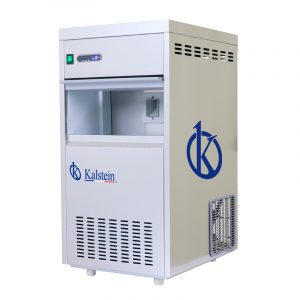
The ice maker is a critical team in health centers and laboratories worldwide. It turns out to be a great ally for healthcare use. Hospitals, laboratories, and research centers generally must have ice-making equipment to preserve samples that must be kept at cold temperatures. For example, in trauma or physiotherapy units, they use ice as a method to deflame; they are also used to store organs when they require emergency transfer, and allow organ storage to reach their destination in perfect condition
Why is a flake ice maker important in a lab?
The importance of this type of ice is in its wide variety of uses due to its practicality and versatility, it is a dry ice and subcooled commonly in very small fragments, it has a presentation in very thin layers of two to three millimeters thick, this depends on the equipment manufacturer, in our case in kalstein we offer you a completely computer controlled ice making process, using imported computer chips for reliable control and easy operation.
What are the capabilities of an ice maker?
An ice maker is a piece of equipment where the water is poured into a tray that has a specific format to shape the ice that you want to create. The tray freezes slowly and gradually in layers until the water freezes completely and creates the ice cubes. Once the correct temperature is reached, the tray heats up enough to allow the cubes to separate. The cubes are deposited in the storage tank.
Ice maker: What technology do you use?
Ice ice makers are specialized equipment that possess the ability thanks to their structure to produce large quantities of ice for disposal in any area or procedure required within the laboratory or other institution. They work by increasing the efficiency of ice production and by supplying large quantities of this element for the various procedures required.